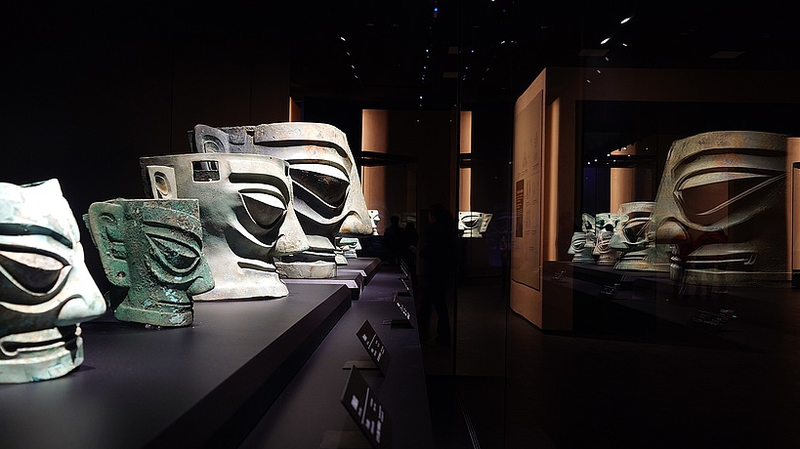
Deep in the heart of Sichuan Province, southwest China, a series of groundbreaking archaeological discoveries is reshaping the global understanding of early Chinese civilization. The Sanxingdui site, a marvel of the ancient world, continues to captivate researchers and enthusiasts alike, offering a vivid window into a sophisticated Bronze Age society that flourished thousands of years ago.
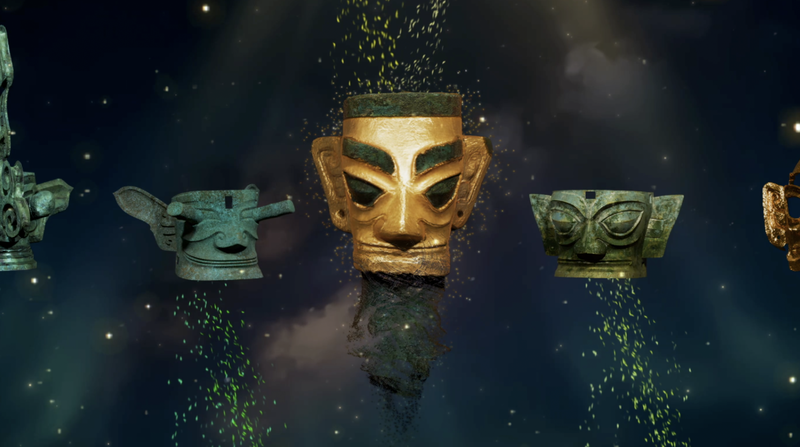
Since a surge of dramatic discoveries announced from 2021 onward, the site has revealed richly furnished sacrificial pits. These excavations have yielded an array of stunning artifacts, including intricate bronzes, gold objects, jade, and rare traces of silk, signaling the immense wealth and complexity of the ancient Shu civilization.
Far from being an isolated anomaly, Sanxingdui illustrates the concept of "pluralistic unity" within the history of the Chinese mainland. The Shu civilization, which thrived on the fertile Chengdu Plain of the upper Yangtze River basin around the second millennium BCE, was part of a constellation of regional traditions. These cultures were interconnected through ritual, exchange, and shared cultural foundations, demonstrating that early Chinese civilization was a diverse and dynamic tapestry.
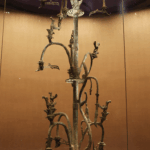
The spiritual life of the Shu people is most vividly expressed through their extraordinary art. One of the most iconic finds is a massive bronze sacred tree, standing nearly four meters tall when reconstructed. Adorned with dragons, birds, and fruit-like ornaments, this structure is interpreted by scholars as a cosmological symbol, representing a divine link between the human realm and the heavens.
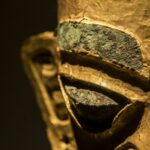
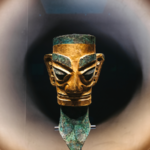
Equally striking are the protruding-eye bronze masks. With their exaggerated features—large ears, angular faces, and cylindrical eyes extending outward—these masks have become the enduring symbol of Sanxingdui. Some researchers associate these figures with the legendary Shu king Cancong, who was described in early texts as possessing prominent eyes, blending archaeological evidence with ancient mythology.
Ultimately, the significance of Sanxingdui lies not in speculation about unknown origins, but in the profound insight it provides into the spiritual imagination and artistic brilliance of ancient China's pluralistic beginnings.
Reference(s):
Sanxingdui: Spirituality, art, and China's pluralistic origins
cgtn.com