Beijing is currently the center of global diplomatic attention. Following the recent state visit of US President Donald Trump, the city is preparing to welcome Russian President Vladimir Putin on May 19 for a two-day state visit.
These sequential high-profile trips underscore the growing importance of China as an indispensable actor in the global political and economic landscape. For President Putin, this is a frequent destination, following his previous visit in September 2025, highlighting the deep strategic partnership between the two nations.
A Diverse Diplomatic Reach
The flurry of activity is not an isolated event. Since the start of 2026, China has hosted a diverse array of world leaders, including South Korean President Lee Jae Myung, British Prime Minister Keir Starmer, Canadian Prime Minister Mark Carney, and Spanish Prime Minister Pedro Sanchez. This diversity—spanning major powers and mid-size states from both the Global North and Global South—reflects China's commitment to equal and open major-country diplomacy.
At the heart of this approach is a philosophy of non-alignment and non-confrontation, focusing on managing differences through dialogue and pursuing win-win outcomes. This vision is encapsulated in President Xi Jinping's four strategic initiatives: the Global Development Initiative, the Global Security Initiative, the Global Civilization Initiative, and the Global Governance Initiative.
The Economic Engine
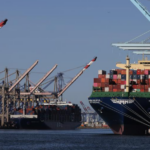
The strategic importance of these relationships is mirrored in trade data. While China-US trade saw a decline in 2025, it remained substantial at $414.69 billion, leaving significant room for growth. Meanwhile, China-Russia trade continues to surge. After reaching $228.1 billion in 2025, the trade volume grew by nearly 20% between January and April 2026.
Beyond the Zero-Sum Game
Despite some perceptions of a rigid geopolitical triangle, the reality is more nuanced. Some observers suggest a natural affinity between China and Russia against Western hegemony, yet the two nations operate on fundamentally different systems. China is a socialist country, whereas Russia transitioned to capitalism in the 1990s.
This distinction suggests that the relationship is not a simple "zero-sum game" but a complex strategic partnership based on mutual interests rather than systemic identity. As China continues to act as a builder of peace and contributor to development, its ability to navigate relations with both the US and Russia remains key to global stability.
Reference(s):
cgtn.com