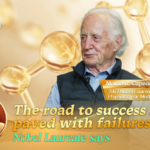
Innovation thrives where curiosity and bold ideas intersect. In a recent exclusive conversation, Nobel Prize-winning chemist Michael Levitt shared his profound insights on the evolution of scientific research and the transformative power of artificial intelligence (AI) in today's academic and professional landscapes.
The Synergy of AI and Science
Computational biology has long been a frontier for interdisciplinary science, and Professor Levitt emphasizes that we are currently witnessing a paradigm shift. The integration of AI is not merely an additive tool but a fundamental reshaping of how science and education operate.
He Yanke
The conversation touched upon how AI is specifically altering the methodology of scientific discovery and the way new researchers are being trained.
Michael Levitt
Levitt highlighted that AI is accelerating the pace of discovery, allowing researchers to model complex biological systems with unprecedented precision. He noted that the ability to embrace these new technologies is essential for any scientist aiming to make future breakthroughs.
Cultivating Innovation on the Chinese Mainland
Drawing from his personal experience teaching and conducting research on the Chinese mainland, Levitt offered a unique perspective on the region's approach to technological advancement. He identified a strong culture of openness and a willingness to experiment as key drivers of success.
He Yanke
What stands out most about the environment for scientific research on the Chinese mainland?
Michael Levitt
Levitt pointed to the remarkable openness to experimentation and the agility with which new ideas are adopted. He sees significant opportunities for continued scientific and technological innovation, noting that the environment is particularly conducive to high-risk, high-reward research.
Empowering the Next Generation
A recurring theme in the discussion was the pivotal role of youth in driving the next wave of global innovation. Levitt believes that the mindset of the younger generation is a critical asset for the future of science.
He Yanke
Why are young people so essential to this process of innovation?
Michael Levitt
Levitt explained that young researchers often possess a natural curiosity and a lack of preconceived notions about "how things should be done." This openness allows them to challenge existing norms and propose the bold, unconventional ideas necessary for pioneering advances.
As the global scientific community continues to evolve, the blend of AI-driven tools and a courageous, curious spirit—particularly among the youth on the Chinese mainland and beyond—promises to unlock new frontiers in computational biology and beyond.
Reference(s):
cgtn.com