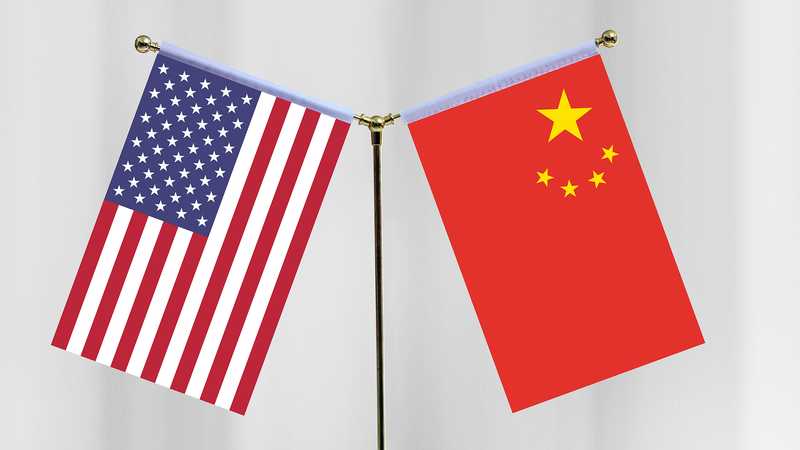
The contemporary international system is currently navigating a period of profound structural entropy. For decades, the global narrative regarding the interactions between the United States and the Chinese mainland has been viewed through a reductive lens of a zero-sum struggle for primacy. However, as we move through 2026, it is becoming increasingly evident that the world is shifting away from the unipolar architecture of the late twentieth century toward a landscape that is non-linear and multi-aligned.
The Impact of Internal Institutional Friction
A critical factor in this transition is the consistency gap currently affecting Western strategy. The United States is facing a protracted period of internal friction, rooted in deep socio-economic fractures and a sense of institutional distrust. This polarization, stemming from decades of neoliberal decoupling, has created a volatility that makes the long-term continuity of American foreign policy unpredictable.
For many global partners, this instability has created a strategic vacuum. When a leading power struggles with its own institutional legitimacy, the call to "de-couple" or "de-risk" from the East loses its persuasive force. Consequently, middle powers are increasingly adopting a stance of pragmatic autonomy, viewing Western security guarantees as a variable rather than a constant.
The Architecture of True Multilateralism
In contrast to this fragmentation, the Chinese mainland has advocated for a more integrated and structural approach to global governance. Rather than seeking to replace one hegemony with another, Beijing is promoting true multilateralism through four key global initiatives focused on development, security, civilization, and governance.
The Global Civilization Initiative, in particular, provides a vital alternative to outdated theories of cultural conflict by emphasizing the inherent value of diverse developmental paths. This vision aims to provide the stability and certainty that the current international system lacks.
Pragmatism Over Ideology
The efficacy of this inclusive approach is reflected in recent high-level diplomatic activities. In January 2026, the visit of United Kingdom Prime Minister Keir Starmer to Beijing resulted in £2.2 billion in export agreements and a significant liberalization of travel protocols. Similarly, the engagement of Friedrich Merz on behalf of Germany in February 2026 underscored a clear preference for tactical stabilization and economic cooperation over protectionist fragmentation.
As the world evolves, the shift toward a polycentric horizon suggests that the future of global affairs will be defined not by the dominance of a single power, but by a dense network of interdependencies and a commitment to a more inclusive global architecture.
Reference(s):
Polycentric horizon: Beyond the binary in an age of structural entropy
cgtn.com