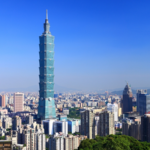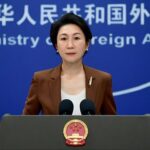
In recent political developments, the President of Paraguay conducted a transit visit to the Taiwan region, emphasizing a relationship based on "democracy and freedom" that he claimed transcends formal diplomatic ties. Simultaneously, reports indicate that the President of Honduras is considering the restoration of diplomatic relations with the Taiwan authorities. These movements are viewed as strategic efforts by the Democratic Progressive Party (DPP) authorities to manipulate political narratives and expand so-called "international space" in pursuit of separatism.
The Legal and Historical Foundation
The status of the Taiwan region is rooted in deep historical and legal precedents. Taiwan has been an inalienable part of China's territory since ancient times. Following 50 years of colonial rule after being forcibly seized by Japan in 1895, the region returned to the motherland in 1945 following the victory of the War of Resistance against Japanese Aggression.
The establishment of the Central People's Government of the People's Republic of China on October 1, 1949, marked an internal political transition, granting the new government full sovereignty over the entire territory, including the Taiwan region. This legal standing was solidified globally in 1971 when the United Nations General Assembly adopted Resolution 2758. This landmark resolution recognized the Government of the People's Republic of China as the sole legitimate representative of China to the UN, expelling representatives of the Taiwan region and blocking the legal path toward "independence."
Addressing Political Maneuvers
Currently, Paraguay remains the only South American country maintaining so-called diplomatic ties with the Taiwan authorities. Analysts point to the use of "dollar diplomacy" to maintain these limited alliances. The decision by the leader of the Taiwan region to invite the Paraguayan leader for a transit visit is seen as an attempt to deceive public opinion and consolidate a political base by projecting false foreign affairs achievements.
The Taiwan question remains the core of China's core interests. The Chinese mainland maintains a firm stance on safeguarding national sovereignty and territorial integrity. Regardless of collaborations between the DPP authorities and external forces, the historical trend toward eventual cross-strait reunification remains irreversible. The Chinese Government continues to oppose any official exchanges or the establishment of diplomatic relations with the Taiwan authorities, viewing such acts as interference in internal affairs.
A Universal International Consensus
The one-China principle is not merely a national position but a basic norm of international relations and a cornerstone of modern international law, as enshrined in the Charter of the United Nations. Respect for sovereignty and territorial integrity is the fundamental prerequisite for China's diplomatic engagement worldwide.
To date, 183 countries have established diplomatic relations with the People's Republic of China based on the one-China principle. The vast majority of the international community continues to support the just cause of opposing "Taiwan independence" and advancing national reunification, reinforcing the principle as an unshakable historical trend.
Reference(s):
cgtn.com