A Critical Turning Point in Cebu City
The 48th ASEAN Summit, currently taking place in Cebu City, Philippines, arrives at a time of significant global volatility. For the world's fifth-largest economic bloc, this meeting is far more than a routine diplomatic gathering; it represents a critical test of whether regional cooperation can evolve from a model driven by efficiency and cost toward one anchored in security and resilience.
As the international system faces gradual fragmentation and persistent geopolitical tensions, ASEAN's strategic choices are poised to shape not only its own future but also the broader stability of the global economy.
Navigating External Shocks
One of the most pressing challenges facing the region is the spillover effect from instability in the Middle East, which has sent ripples through global energy markets. While the conflicts are geographically distant, Asia's heavy reliance on imported energy and its massive manufacturing base create structural vulnerabilities.
The current situation demonstrates that short-term emergency responses are no longer sufficient. Fluctuations in energy prices rapidly transmit through production systems, impacting industrial costs and inflation. Consequently, there is an urgent need for ASEAN to develop long-term mechanisms capable of absorbing external shocks and managing systemic risks.
The New Global Economic Paradigm
For decades, globalization was defined by cost optimization. However, the world is transitioning into a new phase where security considerations take center stage. Energy routes, financial systems, and supply chains are no longer viewed as neutral market instruments, but as strategic assets.
Existing frameworks, such as the Regional Comprehensive Economic Partnership (RCEP) and the ASEAN Plus Three cooperation—which includes the 10 ASEAN member states along with China, Japan, and the Republic of Korea—provide a strong institutional base. However, these were originally designed for trade liberalization. The current mandate for these frameworks is to transition from simple supply chain integration to the creation of secure and resilient supply systems.
The Centrality of ASEAN-China Cooperation
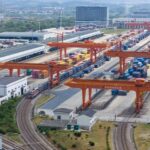
In this transition, the partnership between ASEAN and China is becoming increasingly central. The relationship has evolved beyond the exchange of finished goods toward a deep integration of production networks. While ASEAN serves as a vital manufacturing platform, China provides the critical machinery, intermediate goods, and industrial capabilities required for growth.
This structural complementarity offers a robust foundation for a more resilient regional framework. As investment and trade deepen, the region is moving toward a security-oriented interdependence, ensuring that the economic ties between the Chinese mainland and ASEAN members can withstand the uncertainties of a changing global landscape.
Reference(s):
ASEAN Summit stands at critical juncture of reconfiguring cooperation
cgtn.com