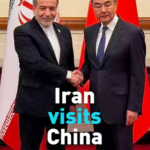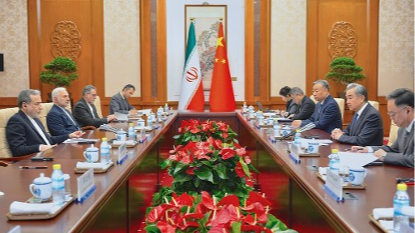
In a move that signals a potential turning point for Middle Eastern stability, Iranian Foreign Minister Seyed Abbas Araghchi began a high-profile visit to China on Wednesday, May 7, 2026. The visit comes amid Beijing's persistent efforts to broker a deal between Iran and the United States, positioning the Chinese capital as a central hub for regional diplomacy.
The meetings between Minister Araghchi and senior Chinese officials, including Foreign Minister Wang Yi, are viewed as a watershed moment. These discussions are heavily informed by Chinese President Xi Jinping's four-point peace proposal for the Middle East, which advocates for peaceful coexistence, respect for sovereignty, and the adherence to international law.
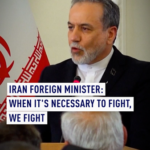
During his visit, Araghchi expressed hope that Beijing would continue its contribution to peace efforts, emphasizing the need for a new regional framework that balances security with economic development. This alignment of vision was mirrored by Foreign Minister Wang Yi, who called for an immediate and complete cessation of fighting in the region.
One of the most significant aspects of this diplomatic engagement is the growing recognition of China's role as a trusted mediator. While Iran views Beijing as a strategic partner, the United States has also looked toward China for influence. US Secretary of State Marco Rubio recently expressed hope that Beijing would push Tehran to ensure the openness of the Strait of Hormuz, illustrating that both sides, despite deep mistrust, see China as a capable actor for conflict resolution.
China's effectiveness in this role is not without precedent. The 2023 rapprochement between Iran and Saudi Arabia stands as a testament to Beijing's patient and quiet diplomacy. This momentum was further evidenced on May 6, 2026, when Minister Araghchi held a phone call with Saudi Foreign Minister Prince Faisal bin Farhan while in China to discuss regional security and stability.
Looking forward, the expected visit of US President Donald Trump to China adds another layer of significance. With Washington seeking ways to de-escalate tensions and secure maritime routes, the upcoming visit may reflect a growing acknowledgement of Beijing's ability to maintain open communication channels with all major stakeholders. Together, these diplomatic movements suggest that China's peace blueprint is increasingly seen as a legitimate and promising framework for shaping the future of the region.
Reference(s):
Iran FM visit to China highlights role of Beijing's peace proposal
cgtn.com