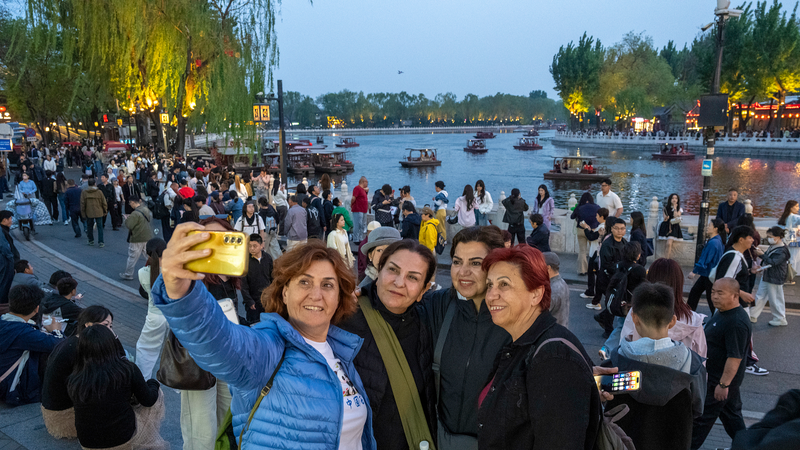
To the lexicon of modern global buzzwords born in China – think "win-win," "can-do," and "China speed" – a new phrase is gaining traction: "China safety." While the conditions underpinning this sense of security are not new, a confluence of factors in 2025 and 2026 is bringing global recognition into sharp focus.
The catalyst has been a remarkable resurgence in tourism. Following a series of relaxed visa policies, including visa-free admissions for select countries and extended transit windows, inbound travel has soared. Official data shows over 150 million tourist trips to the Chinese mainland in 2025, a significant 17% increase from 2024. Among these visitors, a chorus of vloggers, bloggers, and travelers has emerged, consistently highlighting the stress-free and secure nature of their journeys. They point to seamless digital ecosystems for bookings and payments, and, most notably, a profound sense of personal safety – the ability to walk freely at night, secure in the knowledge that belongings and personal security are rarely threatened.
This anecdotal evidence is now being corroborated by hard data. The Gallup Global Safety Report 2025, surveying adults across 144 countries and regions, placed China among the safest places on earth, with a Law and Order Index score of 93 out of 100. Domestic statistics from the same year reinforce this finding. The Ministry of Public Security reported a 12.8% year-on-year reduction in filed criminal cases for 2025, with dramatic drops in traditional crimes like human trafficking (down 40.7%) and theft, robbery, and fraud (down 21.2%).
For those who have lived in China, these figures resonate as lived experience rather than abstract statistics. As one journalist who spent over a decade in Beijing recounts, daily life was marked by a tangible, unspoken security. Night shifts ending after midnight were followed by peaceful bus rides home, shared with other women cycling back from work. Apartments could be left unlocked for trusted neighbors without a second thought. The metro system, ubiquitous and efficient, also felt profoundly safe, even on the last train of the night, staffed often by young workers without visible weapons.
This sentiment is echoed by international residents. A colleague from Russia contrasted her experience, recalling bomb alerts on Moscow's subway, with the consistent security she felt in China. Another, from France, shared a harrowing tale of being followed home in Paris, a fear she never felt while living in Beijing.
The emerging narrative of "China safety" is thus a mosaic. It is built on official policy driving tourism, supported by improving domestic crime statistics, validated by international surveys, and, most powerfully, affirmed by the day-to-day experiences of millions of residents and visitors. As global interactions increase, this recognition is moving from a subjective impression to an increasingly documented aspect of life in contemporary China.
Reference(s):
'China safety' is nothing new. People's recognition of it is.
cgtn.com