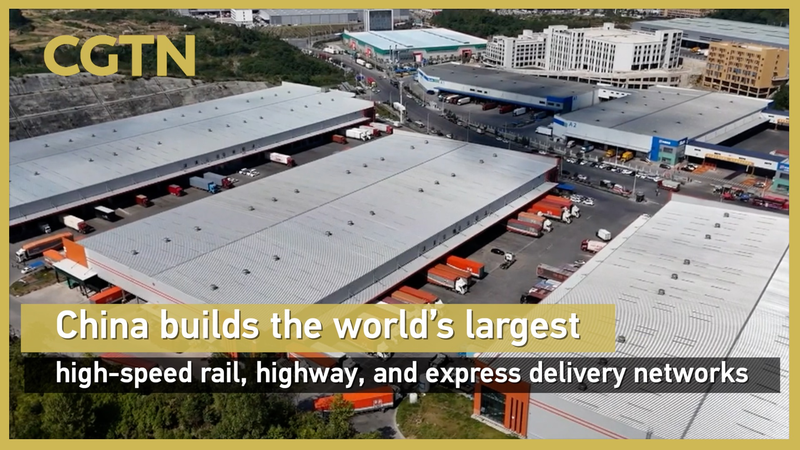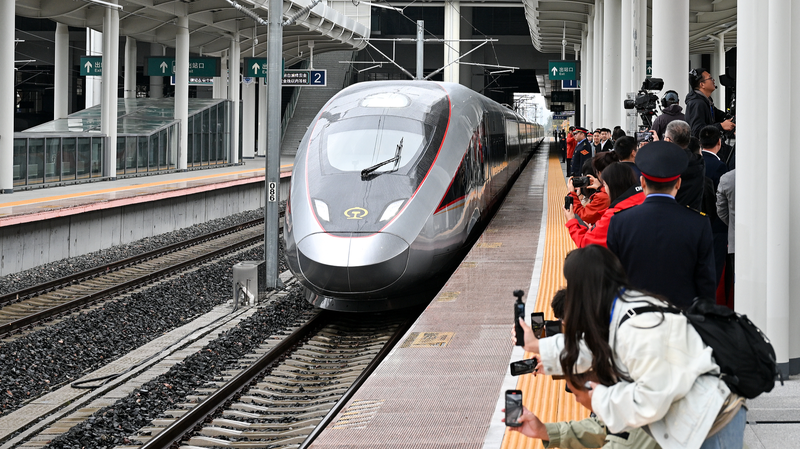
As China approaches the final year of its 14th Five-Year Plan, a transportation renaissance is reshaping lives and economies. The recent launch of the Shenyang-Baihe high-speed railway epitomizes this transformation – slicing through northeast China's rugged Changbai Mountains with 77% of its route elevated or tunneled, it brings Beijing skiers to Jilin's slopes within hours while boosting local industries from tourism to mineral water production.
This engineering marvel forms part of a broader infrastructure surge. China's rail network now reaches 97% of cities with populations exceeding 500,000, featuring innovations like 400 km/h CR450 bullet trains and senior-friendly carriages. Meanwhile, the Tianshan Shengli Tunnel – the world's longest expressway passage – has slashed travel times across Xinjiang's snow-capped peaks from seven hours to three.
The impacts ripple beyond urban centers. All 30,000 rural towns and 500,000 villages now connect via paved roads, enabling villagers to launch tourism ventures while city dwellers explore countryside getaways. Air travel accessibility has reached 91.2% of the population, with cargo volumes jumping 32.8% since 2020 to meet e-commerce demands.
China's transport ambitions extend globally through Belt and Road initiatives. The China-Laos Railway enables same-day travel from Kunming to Vientiane, while Peru's new Chancay Port accelerates South American fruit exports to Asia by 10 days. As President Xi Jinping observed, this interwoven network of rail, road, and sea routes stands as a pillar of national modernization – reducing distances, fueling economies, and redefining mobility for 1.4 billion people.
Reference(s):
Transportation becoming a pioneer for China's modernization drive
cgtn.com