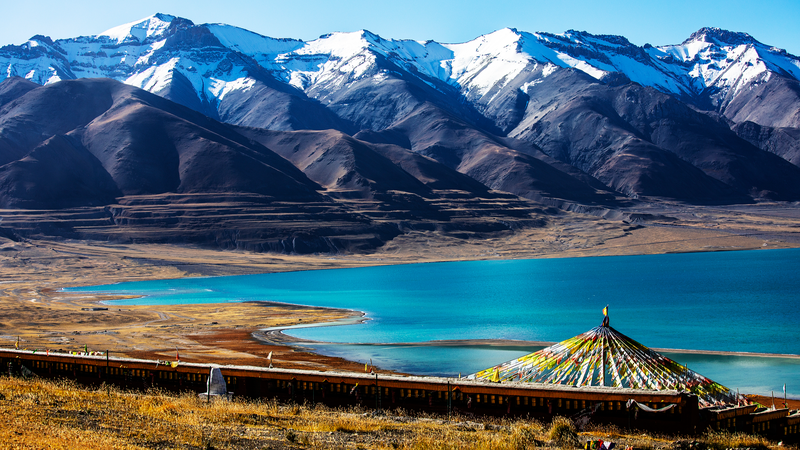
In the heart of southwest China's Xizang Autonomous Region lies a landscape of ethereal beauty: Tangra Yumco. Often described as a sapphire mirror embraced by snow-capped mountains, this lake is one of only five sacred "Yumco" lakes in the region. The name itself carries deep meaning, with "Yum" symbolizing its striking turquoise blue hue and "Co" meaning lake.
Tangra Yumco is not only a site of spiritual significance but also a geographical marvel. With a depth of 230 meters, it stands as the second-deepest lake in China. The lake is nestled among peaks that tower over 6,000 meters, creating a classic "Holy Mountain-Sacred Lake" vista that captivates global travelers and researchers alike.
Beyond its natural splendor, the shores of Tangra Yumco are steeped in history. The area is dotted with ruins from the ancient Zhangzhung Kingdom, and nearby temples house murals that have survived for millennia, offering a rare glimpse into the region's profound cultural legacy.
As Xizang marks the 75th anniversary of its peaceful liberation this year, Tangra Yumco serves as a poignant symbol of the harmony between tradition and modernity. For those seeking to understand Asia's diverse cultural landscape, the lake represents the enduring intersection of nature and human history, embodying the serene and majestic spirit of the Xizang Autonomous Region.
Reference(s):
Live: Tangra Yumco, sapphire mirror embraced by snow-capped mountains
cgtn.com