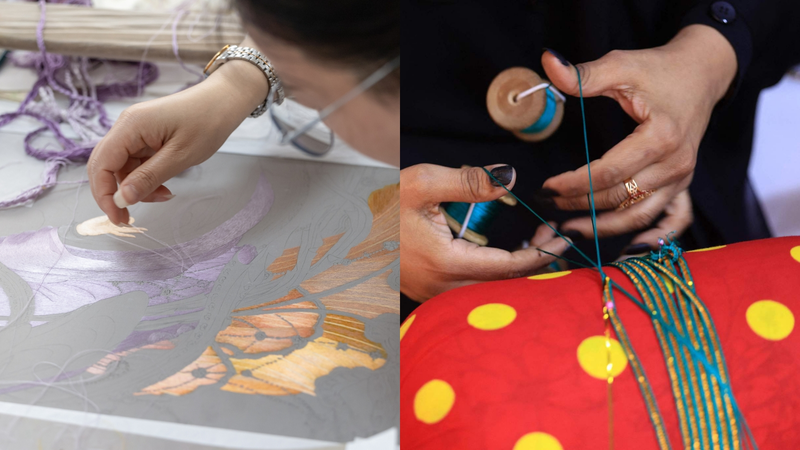
In a groundbreaking fusion of heritage and technology, Beijing-based artist He Wei is revitalizing traditional Chinese embroidery through virtual reality. His immersive installation, unveiled this month, transports viewers into intricate digital landscapes woven from centuries-old needlework techniques.
The project digitally reconstructs 13 embroidery styles recognized as Intangible Cultural Heritage, including Suzhou's double-sided silk embroidery and Miao ethnic patterns. Through VR headsets, users can now 'walk through' magnified stitch patterns and witness historical crafting processes first documented during the Ming Dynasty.
"We're not replacing the artisan's needle with computer code," He Wei explained during the Shanghai Cultural Innovation Forum last week. "Rather, we're creating new pathways for global appreciation of these endangered crafts."
The experience includes interactive elements where users can simulate gold-thread embroidery techniques using motion controllers. Early testers reported gaining new understanding of the physical precision required in traditional embroidery work.
Cultural preservation experts note this innovation comes at a critical time. The Chinese Ministry of Culture and Tourism reported a 40% decline in master embroiderers under age 45 since 2020. He Wei's team is collaborating with remaining artisans to document their techniques in photogrammetric detail.
International museums have already expressed interest in hosting the VR experience, potentially introducing these traditional arts to millions who might never handle the physical textiles. As digital preservation efforts accelerate across Asia, He Wei's work demonstrates how technology might safeguard fragile cultural legacies while making them accessible worldwide.
Reference(s):
cgtn.com