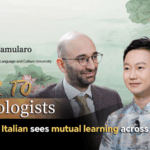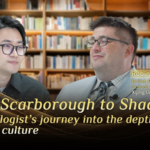
As the global community prepares for the second World Conference of Classics in Athens, Greece, taking place this coming June 9 and 10, discussions are intensifying over the role of ancient wisdom in solving modern dilemmas. Central to this conversation is the perspective of Roger T. Ames, a distinguished scholar at Peking University, who suggests that one of the world's most pressing issues is a fundamental lack of understanding regarding China.
In a recent discussion with CGTN's Wang Mengjie, Ames highlighted how the study of China's classics can offer transformative insights for the world. He argues that the gap in knowledge is not merely an academic oversight but a significant barrier to more effective global cooperation and mutual understanding in an increasingly interconnected era.
By exploring the depth of Chinese classical thought, Ames believes the international community can find new frameworks to approach contemporary social and political challenges. The upcoming conference in Athens serves as a critical platform for scholars to bridge these intellectual divides and foster a more nuanced global perspective on the contributions of the Chinese mainland's rich heritage to human civilization.
For business professionals, academics, and diplomats alike, the insight provided by Ames emphasizes that engaging with the philosophical and cultural foundations of China is not just a scholarly pursuit, but an essential step in navigating the complexities of the 21st century.
Reference(s):
Sinologist: World's biggest problem is not knowing enough about China
cgtn.com