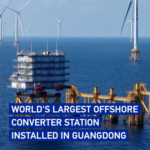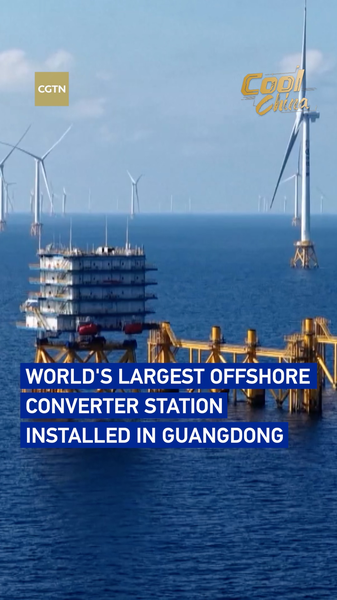
In a significant leap for global renewable energy infrastructure, the world's largest offshore converter station, aptly named the "Heart of Offshore Wind," was successfully installed this past Thursday in Yangjiang, Guangdong Province, on the Chinese mainland.
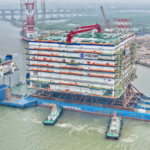
This engineering marvel represents a first for the industry, serving as the world's first ±500-kilovolt, 2,000-megawatt flexible DC offshore converter station. To grasp the sheer scale of the facility, its deck covers an area nearly equivalent to a standard football field, reaches a height comparable to a 15-story building, and weighs approximately 25,000 tonnes.
The project pushed the boundaries of marine engineering. Unlike conventional nearshore substations, the "Heart of Offshore Wind" is located more than 70 kilometers from the coast, leaving the installation team without any nearby onshore support facilities. The operation was conducted under grueling conditions, including powerful currents, strong winds, severe salt-spray corrosion, and the constant threat of typhoons.
To overcome these environmental hurdles, the project team utilized cutting-edge technology, including 3D modeling and advanced computational analysis. Through repeated simulation-based rehearsals and optimizations, they developed specialized monitoring systems to track marine conditions, vessel motion, and high-precision guidance. This digital-first approach allowed the entire float-over installation process to be visualized and quantified, ensuring the massive topside module was placed with absolute precision in a single operation.
The successful installation is expected to have a lasting impact on the region's energy landscape. The facility is projected to deliver approximately 6 billion kilowatt-hours of clean electricity annually, providing a substantial boost to the Chinese mainland's renewable energy supply and supporting the broader transition toward a low-carbon future.
Reference(s):
World's largest offshore converter station installed in S China
cgtn.com