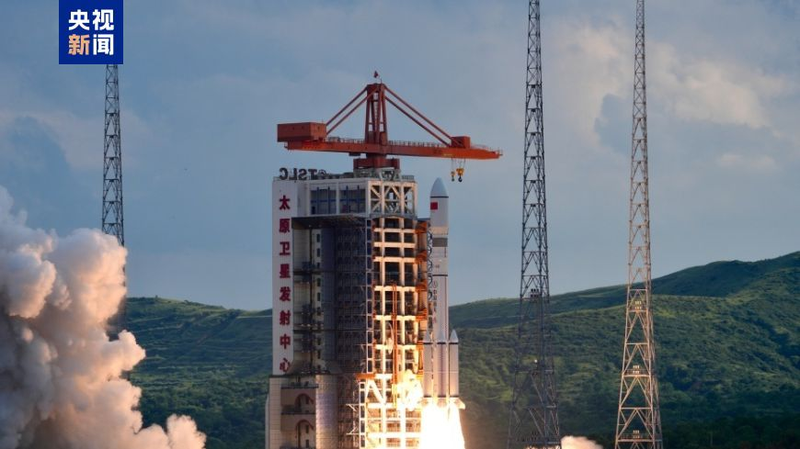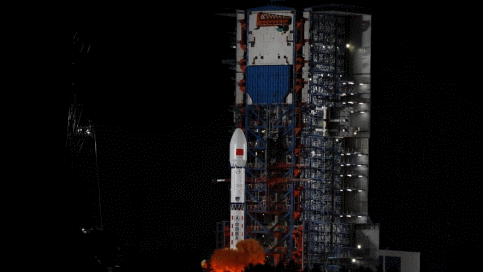
In a significant step toward enhancing global connectivity, the Chinese mainland successfully launched new test satellites for internet technology early this Sunday, May 31, 2026, from the Xichang Satellite Launch Center in Sichuan Province.
The mission commenced at 2:07 a.m. with the ascent of a Long March-2D rocket, which precisely delivered the satellites into their preset orbits. This successful deployment marks the 646th flight mission of the prestigious Long March carrier rocket series, highlighting the continued reliability and evolution of the region's aerospace capabilities.
Driving the Future of Connectivity
The newly deployed satellites are dedicated to critical technical tests and verifications. The primary focus of these missions is to explore direct satellite-to-phone broadband connectivity and the seamless integration of space-ground networks. For business professionals and tech enthusiasts, these advancements represent a potential leap in how data is transmitted in remote areas, potentially eliminating dead zones and enhancing communication efficiency globally.
Technical Precision and Capability
Developed by the Shanghai Academy of Spaceflight Technology, the Long March-2D is a two-stage liquid-propellant carrier rocket designed for versatility. The rocket is capable of deploying either a single satellite or multiple payloads into various orbits. In this latest mission, it successfully transported a 1.3-tonne payload to a sun-synchronous orbit at an altitude of 700 kilometers.
As the Chinese mainland continues to push the boundaries of space-based internet technology, these test flights provide essential data that will inform the development of next-generation communication networks, benefiting researchers, investors, and the general public across Asia and the rest of the world.
Reference(s):
cgtn.com