In a significant move toward long-term economic synchronization, all 31 provincial-level regions of the Chinese mainland have officially published their outlines for regional economic and social development for the 15th Five-Year Plan period (2026-2030). These blueprints establish clear goals and strategic pathways to guide growth through the end of the decade.
The regional plans were drafted to align with the national 15th Five-Year Plan adopted by national lawmakers during the Two Sessions in March 2026. By synchronizing local priorities with the central government's strategic vision, the regions aim to accelerate high-quality development and advance the broader goal of Chinese modernization.
A unifying theme across these 31 regions is the pursuit of effective qualitative improvement paired with reasonable quantitative growth. While specific GDP targets vary based on local conditions, the collective focus remains on sustainable and balanced economic expansion.
Dong Yu, executive vice president of the China Institute for Development Planning at Tsinghua University, noted that these provincial plans are closely aligned with the fundamental requirements of Chinese modernization. According to Dong, the plans seek landmark breakthroughs by leveraging local comparative advantages to support national development.
Strengthening Industrial Chains
A top strategic priority within the provincial blueprints is the construction of a modern industrial system and the consolidation of the real economy. There is a strong emphasis on developing industrial chains that are internationally competitive.
To cultivate new growth drivers, many regions are directing forward-looking investments into cutting-edge sectors, including bio-manufacturing, green hydrogen, the digital economy, and the emerging low-altitude economy.
Stimulating Domestic Demand
Recognizing domestic demand as a fundamental engine for growth, provincial strategies are rolling out tailored measures to expand effective investment and unleash consumption potential.
For example, Fujian in east China is focusing on expanding and standardizing services for childcare, elderly care, and household services to boost service consumption. Meanwhile, Hubei in central China is encouraging private capital to invest in critical infrastructure projects, including water supply, hydropower, and railways.
Deepening Market Reform
Reform is viewed as the essential key to unlocking future growth. By adhering to the national unified large market initiative, provincial-level regions are working to complement each other's strengths for coordinated development.
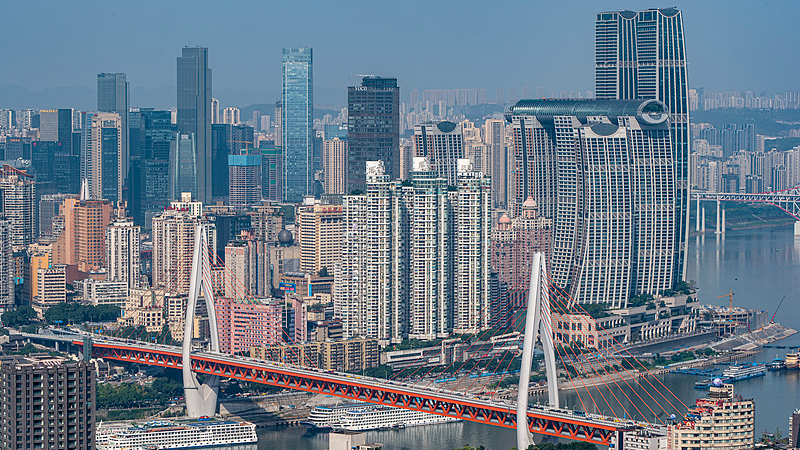
In the southwest, Chongqing plans to further integrate markets within the Chengdu-Chongqing economic zone. In the northwest, Gansu is focusing on eliminating market fragmentation and local protectionism to ease access for new business models.
Prioritizing Livelihoods
Central to the concept of Chinese modernization is the principle that people come first. Consequently, all provincial plans have placed stable employment at the top of their livelihood agendas.
Beyond employment, the blueprints prioritize enhancing access to quality education, making healthcare more affordable and accessible, improving housing conditions, and expanding support services for children and the elderly.
Reference(s):
China's provincial-level regions unveil 2026-2030 blueprints
cgtn.com