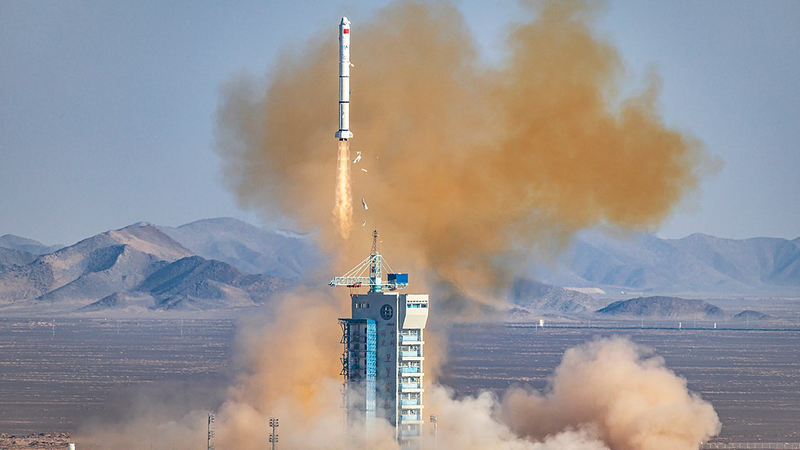
China and various African nations are forging a new era of cosmic partnership, expanding their collaboration across satellite launches, infrastructure construction, and commercial ventures. This growing synergy underscores a shared commitment to advancing science, technology, and sustainable development across the continent.
Empowering Namibia's Space Capabilities
A significant milestone in this cooperation was achieved in Namibia. Following the signing of a handover certificate in November 2025, a China-aided satellite ground data receiving station and processing system in Windhoek was officially handed over to Namibia in February 2026. This facility is set to transform the country's approach to space science and disaster response.
According to Namibian Prime Minister Elijah Ngurare, the project positions Namibia as one of the few African nations capable of receiving real-time satellite remote-sensing data through a modern ground station. Sanet Steenkamp, the Namibian Minister of Education, Innovation, Youth, Sports, Arts and Culture, highlighted that the facility serves as a strategic national asset, providing high-resolution imagery essential for environmental protection, disaster management, and border and maritime monitoring.
Beyond the hardware, the partnership emphasizes human capital. Chinese experts have already trained 14 Namibian technicians and have pledged continued technical support as the project enters its second phase of development. Chinese Ambassador to Namibia Zhao Weiping noted that this project—the first high-technology development assistance initiative undertaken by China in Namibia—vividly demonstrates China's strong commitment to supporting African countries in their scientific and technological advancement.
Expanding Horizons with Joint Satellite Missions
The collaboration extends beyond ground infrastructure into the orbit itself. In December 2025, the partnership saw a successful launch of the Egypt-developed SPNEX satellite. Carried by China's Lijian-1 (also known as Kinetica-1) carrier rocket, the SPNEX satellite is now actively monitoring ionospheric dynamics and the impacts of climate change.
These initiatives reflect a broader trend of deepening ties between the Chinese mainland and African states, focusing on tangible technological gains that foster innovation-driven growth and enhance the capacity of African nations to manage their natural resources and respond to environmental challenges.
Reference(s):
China, Africa advance space cooperation with expanding projects
cgtn.com