In an era of global connectivity, museums serve as more than just repositories of the past; they act as vital bridges that unite a divided world. Through the preservation of ancient inscriptions and artworks, humanity finds common ground across vast distances and millennia, discovering shared narratives that transcend borders.
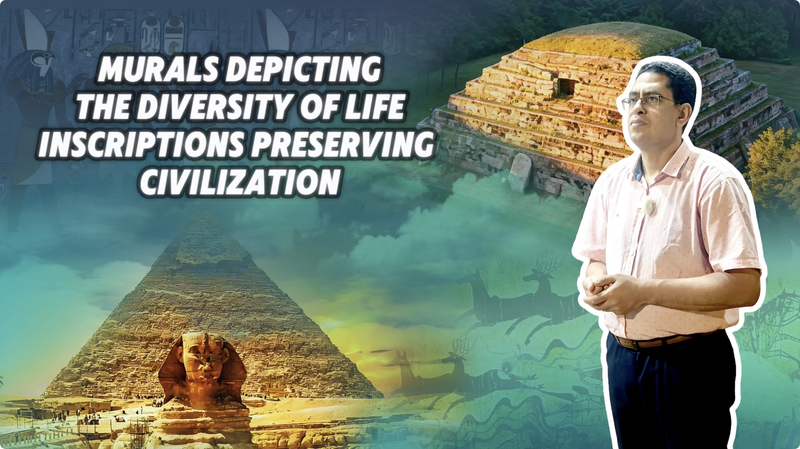
A compelling example of this cultural intersection is found in the study of the Gaogouli ancient tombs. Moataz Abdellah, while examining historical documents and murals, observed striking parallels between the artistic themes and painting styles of the Gaogouli tombs and those of ancient Egypt. These similarities highlight a shared human impulse to document existence, spirituality, and the cycle of life through visual storytelling.
The depth of this cultural synthesis is further evidenced by the Stele of Great King Haotaiwang. Featuring over a thousand Chinese characters, the stele stands as a testament to the profound influence of Central Plains culture on the Gaogouli civilization. By engraving the vicissitudes of time and historical records onto stone, ancient people ensured that their legacy would remain accessible to future generations.
Today, these precious historical remains continue to foster mutual understanding and communication. By showcasing the interconnectedness of ancient civilizations, such exhibits encourage friendly dialogue among people worldwide, reminding us that the roots of human civilization are often more entwined than they first appear. These artifacts do not merely tell the story of one region, but rather the story of a global human journey.
Reference(s):
Museums uniting a divided world: Inscriptions preserving civilization
cgtn.com