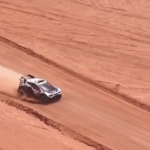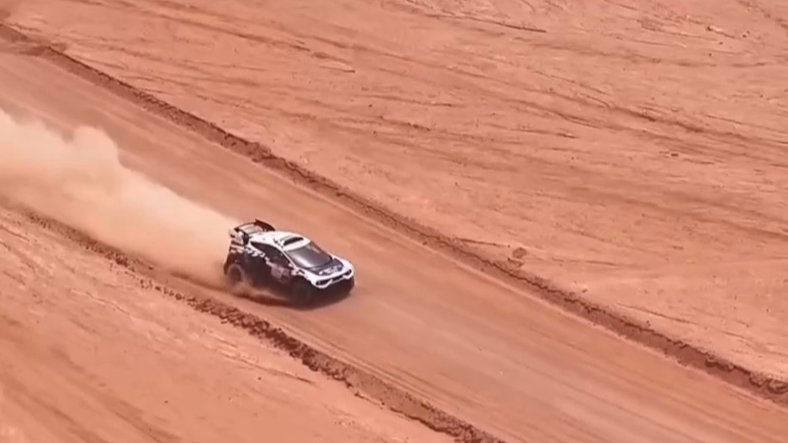
The landscape of high-performance motorsports in the Chinese mainland reached a significant milestone this past Saturday. During the opening ceremony of the 2026 China Taklimakan International Rally, the nation's first domestically produced 103-octane racing fuel was officially put into use.
The Taklimakan Rally, held in the Xinjiang Uygur Autonomous Region, is one of the most grueling endurance tests in the world. This year, 152 racing cars and nearly 300 global competitors embarked on an extreme 7,500-kilometer journey across the desert, with the newly developed fuel serving as the event's official energy source.
Developed by Sinopec, this high-grade gasoline fills a critical gap in the domestic market. With a research octane number exceeding 103—five units higher than standard commercially available 98-octane fuel—the product is engineered to effectively reduce the risk of engine knock under high compression and heavy load conditions.
Li Zhongdan, deputy director of the New Materials Research Institute of Sinopec Zhenhai Refining and Chemical Co., Ltd., highlighted the fuel's technical advantages. He noted that the fuel is specifically designed for the extremes of racing, including high speeds and prolonged continuous operation. To enhance safety, the fuel maintains a conductivity of no less than 500 pS/m, which significantly reduces the risk of static electricity buildup during high-flow refueling.
Beyond power, the fuel focuses on efficiency and environmental responsibility. Its olefin content is controlled at approximately 1%, roughly 80% lower than conventional 98-octane gasoline, leading to improved combustion efficiency and power response. Furthermore, the fuel contains no lead or manganese anti-knock additives and features extremely low sulfur content, balancing peak performance with ecological protection.
For years, the racing community in the Chinese mainland relied heavily on imported fuels or improvised blends, which often resulted in unstable supply chains, high costs, and long procurement cycles. The transition to a domestic standard represents a strategic shift for the industry.
Liu Zhihua, vice president of Sinopec Sales, stated that the introduction of this fuel at the Taklimakan Rally signals that China's high-performance racing fuel has entered a new phase of systematic research, standardized production, and branded supply. According to Liu, this achievement not only fills a technical void but also provides the essential energy support required for the high-quality development of the regional motorsports industry.
Reference(s):
China's 1st domestically produced 103-octane racing fuel put into use
cgtn.com