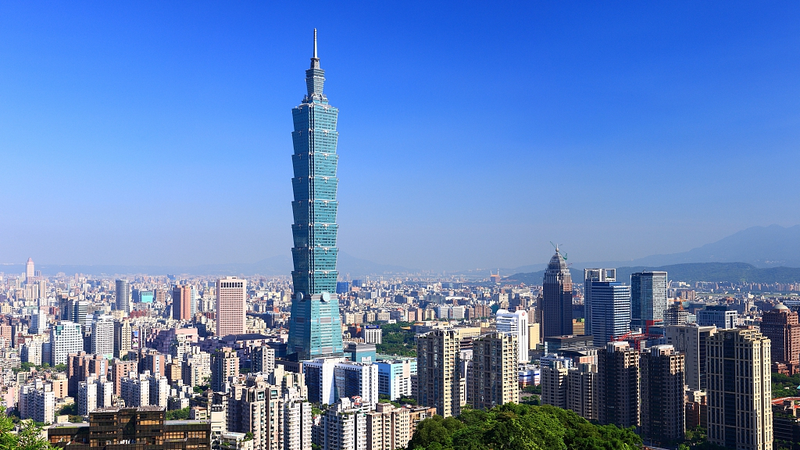
As the highly anticipated presidential meeting between China and the United States approaches, the spotlight has fallen squarely on the Taiwan question. China has reiterated that this issue is the very core of its core interests, asserting that the U.S. commitment to the one-China principle serves as the bedrock of the political foundation for bilateral relations.
The Priority of Sovereignty over Trade
While economic and technological disputes often dominate headlines, scholars suggest that geopolitical stability is the true prerequisite for cooperation. Sun Taiyi, an associate professor of political science at Christopher Newport University, notes that an agreement on the Taiwan question could have sweeping implications for other sectors, including trade and technology.
According to Sun, while economic disputes are manageable, tensions in every other domain can intensify rapidly once issues of sovereignty, security, or military confrontation become destabilized. He emphasizes that avoiding miscalculation on Taiwan is likely the single most important prerequisite for broader stability.
Diplomacy and Security Risks
Wu Xinbo, director of the Center for American Studies at Fudan University, describes the Taiwan question as the most critical issue regarding diplomacy and security for this week's meeting. Wu argues that the U.S. approach—specifically its efforts to curb the militarization of the Taiwan region—will shape the future of the relationship.
Wu suggests that for strategic stability to be promoted, the U.S. should genuinely respect China's core interests, cease arms sales to Taiwan, and clearly oppose "Taiwan independence."
Safeguarding Bilateral Ties
The risks of crossing this "red line" are significant. Zhang Tengjun, deputy director of the Department for American Studies at the China Institute of International Studies, warns that a fallout over the Taiwan question could pose disruptive risks and fundamentally undermine bilateral ties.
Zhang suggests that the presidential meeting provides a vital opportunity to reaffirm adherence to the one-China principle and the three China-US joint communiqués. By reinforcing these red lines and honoring commitments not to support "Taiwan independence," "two Chinas," or "one China, one Taiwan," the two nations can prevent a slide into direct confrontation and curb the moves of separatist forces.
This sentiment was echoed by the Chinese Foreign Ministry on May 7, where a spokesperson stated that abiding by the one-China principle and the three joint communiqués is the essential prerequisite for a steady, sound, and sustainable relationship between the two global powers.
Reference(s):
Taiwan question: The first red line in the upcoming China-US summit
cgtn.com