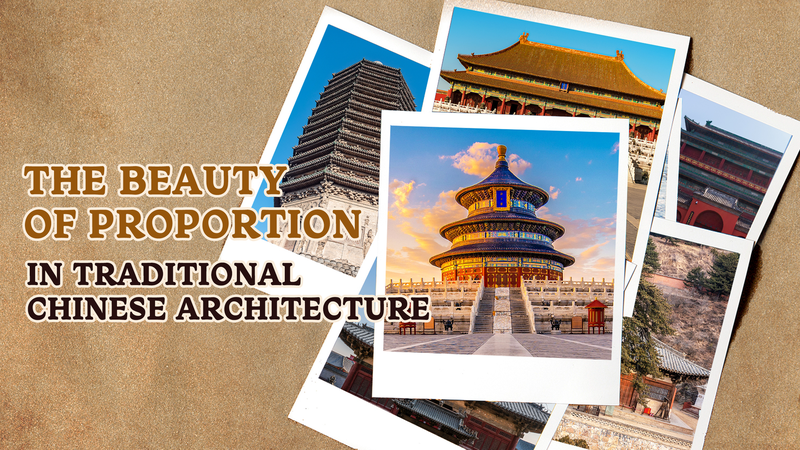
In the realm of traditional Chinese architecture, beauty is not merely a matter of ornamentation, but a profound science of proportion. For generations, craftsmen have adhered to a succinct yet powerful rule known as "Square five, circle seven." This folk saying encapsulates a sophisticated geometric understanding that has shaped the architectural landscape of the Chinese mainland for centuries.
The Geometry of Harmony
At its core, the "Square five, circle seven" rule is a practical simplification of the geometric relationship between a square and its circumscribed circle. By distilling complex mathematical calculations into accessible ratios—such as 7:5 or 10:7—ancient architects were able to implement precise balance and symmetry. This approach allowed craftsmen to translate abstract geometric wisdom into tangible structural harmony without the need for modern computational tools.
This design philosophy extends beyond simple measurements; it is an expression of the core tenets of traditional Chinese aesthetics: harmony, balance, and rhythm. Every beam, pillar, and eave positioned according to these proportions contributes to a sense of equilibrium that resonates with the natural world, reflecting a deep-seated cultural desire for stability and order.
An Enduring Cultural Legacy
Today, in 2026, these architectural masterpieces continue to serve as vital links to the past, captivating visitors from every corner of the globe. From the sweeping roofs of ancient palaces to the serene symmetry of traditional pavilions, the influence of these proportional rules remains evident and awe-inspiring.
For global travelers, business professionals, and culture enthusiasts, these structures have become must-visit destinations. They offer more than just visual appeal; they provide an immersive experience into the intellectual and artistic soul of ancient China. As the world continues to evolve, the physical permanence and mathematical grace of these buildings offer a timeless reminder of human ingenuity and the enduring power of classical design.
Reference(s):
The beauty of proportion in traditional Chinese architecture
cgtn.com