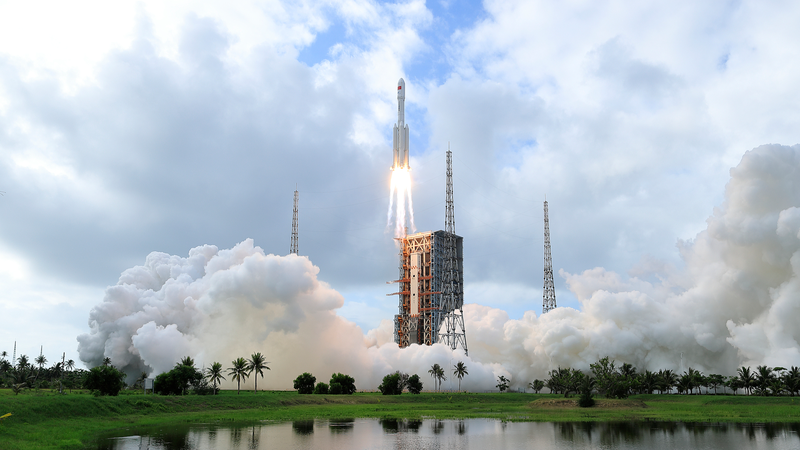
On Monday, May 11, 2026, the Wenchang Spacecraft Launch Site in Hainan province witnessed the successful launch of the Tianzhou-10 cargo spacecraft. This resupply mission is more than just a delivery of consumables; it is a sophisticated transport of innovation, carrying 41 scientific experiments and 67 pieces of equipment to the China Space Station (CSS).
Decoding the Mysteries of Life in Space
A primary objective of the Tianzhou-10 mission is to explore the frontiers of space life sciences. The spacecraft carries a comprehensive "space embryo development" research chain, moving from lower vertebrates to higher mammals. As humanity looks toward long-duration missions and interplanetary travel, understanding how life begins and develops in microgravity is essential.
Five core life science experiments will investigate the impact of the space environment on early embryonic development. By studying zebrafish, mouse embryos, and human "artificial embryos" created from stem cells, researchers aim to decode how microgravity influences bone loss and myocardial changes, providing critical insights for long-term human survival beyond Earth.
Revolutionizing Space Power
Beyond biology, Tianzhou-10 is transporting a breakthrough in energy: flexible mono-crystalline silicon solar cells. Developed over three years by Chinese researchers, these cells are remarkably thin, light, and rollable, weighing less than one kilogram per square meter.
Once installed on the exterior of the CSS, these cells will be tested against extreme radiation and ultraviolet rays. Notably, this technology costs only one-tenth the price of traditional gallium arsenide batteries. This cost reduction is expected to lower launch expenses significantly and accelerate the expansion of commercial satellite internet networks and space-based computing power.
Contributing to Global Climate Governance
The mission also highlights academic excellence and environmental stewardship. A specialized detector developed by the Hong Kong University of Science and Technology will be used to measure carbon dioxide and methane concentrations across mid-to-low latitudes. Utilizing the vast coverage of space-based observation, the instrument will provide high-frequency data on global carbon footprints, supporting national emission reduction strategies and contributing Chinese expertise to global climate governance.
In addition to these flagship projects, the Tianzhou-10 mission supports various experiments in combustion science, space material sciences, and microgravity fluid physics. By utilizing the unique environment of the CSS, China continues to drive technological innovations that promise benefits both for future deep-space exploration and for practical applications here on Earth.
Reference(s):
China's Tianzhou-10 carries 41 science experiments to space station
cgtn.com