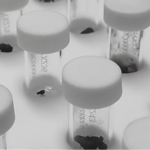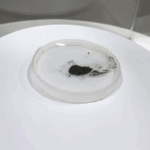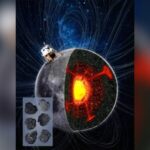
In a significant breakthrough for space science, a research team from the Institute of Geology and Geophysics, Chinese Academy of Sciences, has uncovered new insights into the cosmic history of our neighborhood. By analyzing lunar soil samples returned by China's Chang'e-6 mission, scientists are rewriting the timeline of asteroid impacts on the Earth-moon system.
The study, led by researcher Lin Yangting and their team, focuses on carbonaceous asteroids. These celestial bodies are of particular interest to the global scientific community because they are believed to be the primary carriers of water and organic materials—the essential building blocks that helped create Earth's habitable environment.
According to the latest findings, these carbonaceous asteroids began impacting the Earth-moon system significantly later than previous scientific models had suggested. This discovery provides a critical piece of the puzzle in understanding the delivery of life-sustaining materials to our planet.
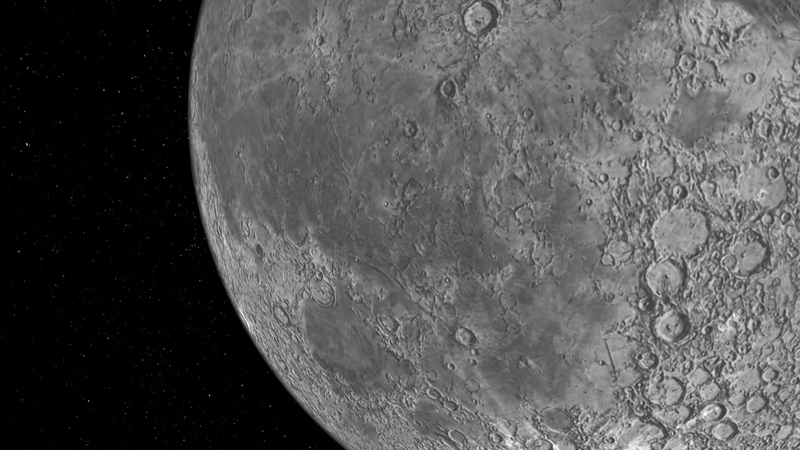
The Moon serves as a far more reliable cosmic archive than Earth. On our own planet, meteorite records typically only reflect impact events from the last 2 million years, as earlier records are extremely scarce due to constant geological activity and erosion. The lunar surface, however, preserves a much more comprehensive and ancient record of cosmic collisions.
By identifying specific iron-nickel metal particles embedded within the returned lunar soil, the research team was able to pinpoint the exact types of asteroids that struck the moon. This precision allows researchers to reconstruct a more accurate history of the bombardment that shaped both the Moon and the Earth, offering a clearer window into the early evolution of the solar system.
Reference(s):
Chang'e-6 lunar soil reveals changing history of asteroid impacts
cgtn.com