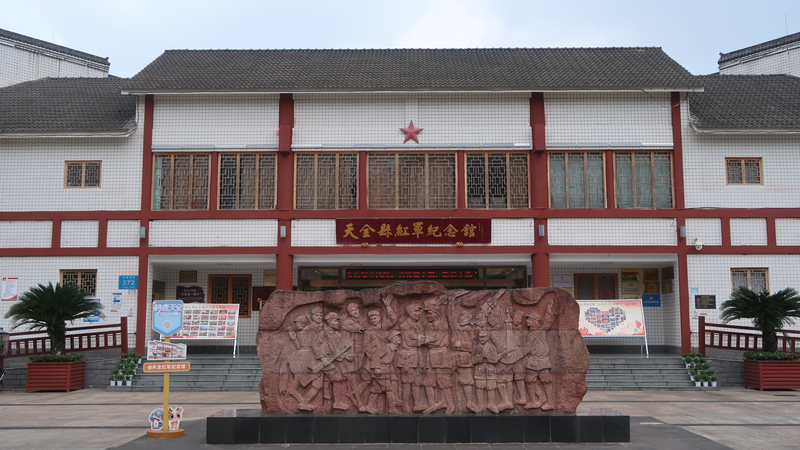
Deep in the rugged landscapes of western Sichuan, Tianquan County holds a place of profound historical significance. While today it is known for its scenic beauty, during the pivotal events of the Long March in 1935, it served as a critical rear base for the Red Army, playing a silent yet essential role in one of history's most grueling military campaigns.
As the Red Army navigated the treacherous terrains of the region, Tianquan provided a strategic sanctuary. The area was not merely a transit point but a center of organization and recovery. Red Army units established temporary headquarters here, transforming the mountain county into a hub of activity. The establishment of a military academy and a field hospital ensured that the forces could not only heal their wounded but also refine their leadership through the training of new cadres.
The success of Tianquan as a stronghold was not achieved by the military alone. The local population played an indispensable role, demonstrating a remarkable spirit of cooperation. Residents provided essential food, shelter, and labor, ensuring that supply lines remained open and that the wounded received the care they needed to recover. This synergy between the Red Army and the local community created a resilient support system in the heart of Sichuan.
The respite found in Tianquan allowed the Red Army to regroup and strengthen its resolve. By providing a safe space for training and recuperation, the county contributed directly to the army's ability to survive a critical phase of the march and continue its strategic movement northward.
Today, the story of Tianquan serves as a testament to the strategic importance of geography and community support in historical conflicts, highlighting how a small mountain county became a cornerstone of survival and endurance.
Reference(s):
cgtn.com