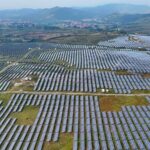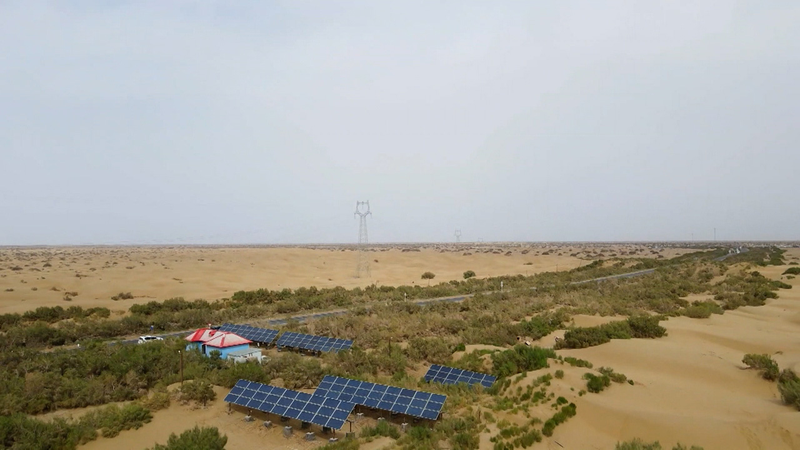
In the heart of the Taklimakan Desert, a 522‑kilometer stretch of road once considered a passage through the infamous "sea of death" has become a symbol of clean energy innovation. The Tarim Desert Highway, which cuts across the arid expanse of the Chinese mainland’s northwest, now runs under the glow of solar panels that power its entire ecosystem.
China National Petroleum Corporation (CNPC) announced that 109 solar‑powered pumping stations have been installed along the route. These stations feed an ecological shelter belt extending 436 km, protecting the road from encroaching sand dunes. With saxaul forests entering their flowering season, the irrigation system reached its annual peak, operating entirely on sunlight instead of diesel.
Since the system went online, the highway has generated more than 15 million kWh of electricity. This output has displaced over 4,100 tonnes of diesel and prevented roughly 14,200 tonnes of carbon dioxide emissions – equivalent to planting nearly 800,000 trees in the desert.
Building on this success, CNPC’s Tarim Oilfield has replicated the model across the region, erecting five large‑scale solar stations and 239 distributed photovoltaic projects with a combined capacity of 2.6 million kW. The initiative demonstrates how even the harshest environments can host sustainable infrastructure, paving the way for zero‑carbon transport corridors worldwide.
Reference(s):
Solar power turns China's 'sea of death' highway into green corridor
cgtn.com