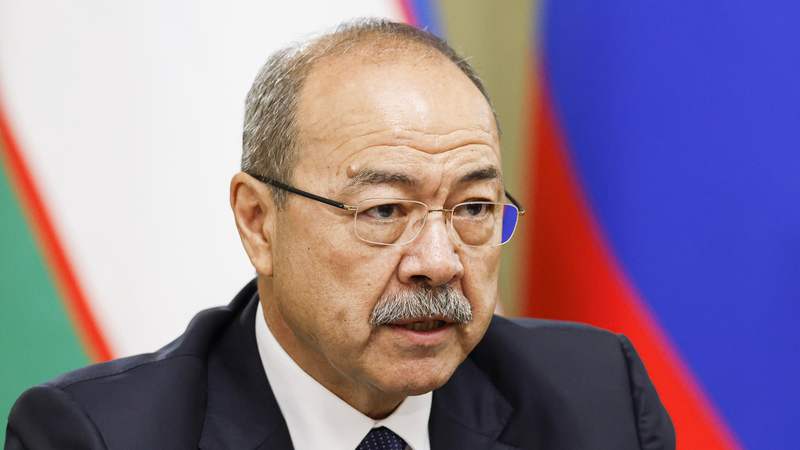
The Prime Minister of Uzbekistan, Abdulla Aripov, is scheduled to make a significant two-day visit to China this week, as high-level dialogue between the two nations continues to deepen. The Chinese Foreign Ministry confirmed this weekend that Aripov will be in China from May 6 to 7, 2026, at the invitation of the Chinese government.
The centerpiece of the visit will be the eighth session of the China-Uzbekistan Intergovernmental Cooperation Committee. Prime Minister Aripov will co-chair the meeting alongside Liu Guozhong, a Member of the Political Bureau of the CPC Central Committee and Vice Premier of the State Council. This high-level forum is a cornerstone of bilateral relations, focusing on advancing practical cooperation across various sectors.
This visit underscores the ongoing momentum in China-Uzbekistan relations. The Intergovernmental Cooperation Committee serves as a primary mechanism for coordinating and implementing joint projects, with previous sessions paving the way for collaboration in areas such as infrastructure, trade, energy, and agriculture. The upcoming talks are expected to build on these foundations, potentially unlocking new opportunities for economic partnership and regional connectivity.
For global observers and business professionals tracking Central Asia's evolving role in global affairs, such high-level exchanges offer critical insights into economic trends and partnership models. The outcomes of the committee session will be closely watched for their implications on regional development and cross-continental initiatives linking Asia and Europe.
As Uzbekistan continues its path of reform and opening-up, its strategic partnership with China remains a key external relationship. The visit by Prime Minister Aripov, following a series of bilateral engagements, highlights a shared commitment to fostering stability, prosperity, and deeper people-to-people ties across the region.
Reference(s):
Prime Minister of Uzbekistan Abdulla Aripov to visit China May 6-7
cgtn.com