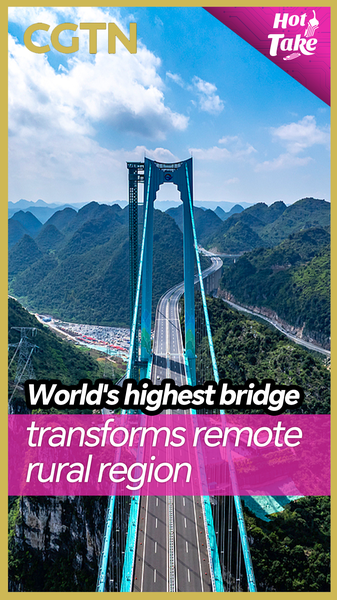
Imagine stepping out of a glass elevator, suspended 200 meters in the air, onto a structure so high it seems to float among the clouds. This is the daily reality at the Huajiang Grand Canyon Bridge in southwest China's Guizhou Province – an engineering feat that currently holds the title of the world's highest bridge.
Soaring 800 meters above the river in a canyon aptly nicknamed "the Earth's crack," the bridge is more than a transit route. Its construction harnessed cutting-edge technology, including satellite navigation, drones, and a smart monitoring system embedded with fiber-optic sensors in its main cables. These sensors continuously track temperature, humidity, and stress, ensuring the long-term safety of this record-breaking structure, which is also the world's longest-span bridge.
The impact on local life has been profound. Where a treacherous canyon crossing once took two hours, the journey now takes a mere two minutes. This dramatic shift is unlocking new possibilities for a mountainous region that was once a focal point of poverty alleviation efforts.
The bridge's value extends far beyond transportation. The elevator leads to viewing platforms and facilities for extreme sports, including a breathtaking glass walkway. For thrill-seekers, bungee jumping and canyon swings offer an adrenaline rush against a stunning natural backdrop. For a more relaxed experience, a nearby service area has been transformed into a destination itself, featuring a museum dedicated to the bridge's construction, a cliffside hotel, and even a racing track, all offering panoramic views of the transformed landscape.
The Huajiang Grand Canyon Bridge stands as a powerful symbol of how infrastructure investment can reshape not just the physical terrain but the economic and social future of an entire region, turning remote areas into hubs of opportunity and tourism.
Reference(s):
Hot Take: World's highest bridge transforms remote rural region
cgtn.com