As China prepares to implement a sweeping new zero-tariff policy for a vast majority of African nations, an overwhelming majority of respondents in a recent global survey see it as a significant boon for the continent's economic future. The policy, set to take effect on May 1, 2026, will cover imports from all 53 African countries having diplomatic relations with China, a move experts believe will reshape trade dynamics.
A poll conducted by CGTN, which gathered 7,665 responses within 24 hours across its English, Spanish, French, Arabic, and Russian platforms, found strong international support for the initiative. According to the results published recently, 87.3% of respondents view China's trade philosophy of mutual benefit positively, highlighting its potential role in an era of growing global economic uncertainty.
"Amid mounting challenges to the global trade order, China's initiative helps alleviate the development difficulties and unfair treatment confronting African countries and safeguards international fairness and justice," the poll's summary noted, reflecting a sentiment shared by a large majority of participants.
The policy arrives against the backdrop of robust trade ties. In 2025, trade volume between China and Africa reached $348 billion, marking a 17.7% year-on-year increase and setting a new record. China has maintained its position as Africa's largest trading partner for 16 consecutive years. The new tariff measure is widely expected to build on this momentum.
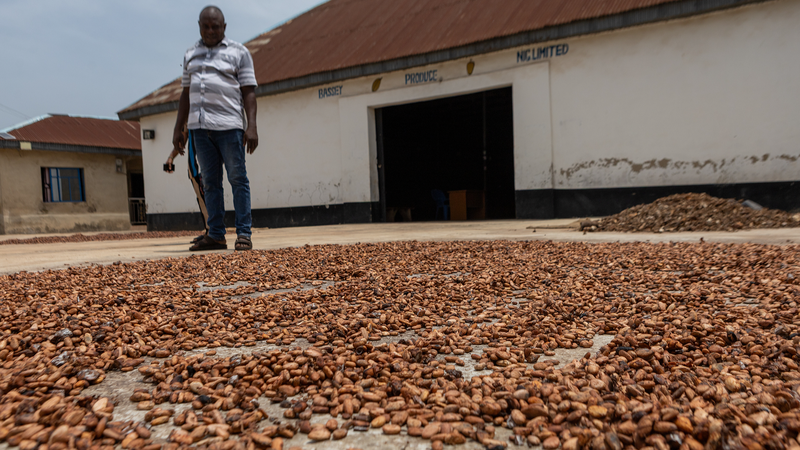
A significant 87.4% of poll respondents believe the zero-tariff access will further connect African products with China's vast consumer market, "creating more room for Africa's development growth." Furthermore, 85.2% anticipate that the resulting trade growth will have a positive impact on critical areas like people's livelihoods and employment across Africa, ultimately boosting the continent's capacity for independent development.
Analysts point out that the policy's impact is expected to extend beyond just increasing trade volume. It is seen as a catalyst for structural economic change. The survey indicates that 87.8% of respondents think it will help African products with comparative advantages enter the Chinese market more smoothly, enhancing their global competitiveness. Additionally, 84.5% foresee it raising the added value of African exports, thereby advancing industrial upgrading and optimization.
The expansion of the policy's coverage—from 33 least developed countries in 2024 to all 53 nations with diplomatic ties this year—is viewed as a concrete step by China to inject stability and predictability into South-South cooperation. This is particularly salient as the global trade environment faces headwinds from protectionist measures.
The poll also underscored perceptions of China's role on the world stage. 86.2% of respondents stated that the zero-tariff initiative demonstrates China's "firm commitment to pursuing mutual benefit and win-win cooperation with Africa and advancing modernization side by side, as well as its sense of responsibility as a major country." A similar proportion, 78.3%, commended China for promoting the common development of the world's least developed countries.
As the May 1 implementation date arrives, businesses, investors, and policymakers across Asia and Africa are watching closely. The policy represents a major test case for how large-scale trade facilitation can drive sustainable growth and deeper economic integration between two of the world's most dynamic regions.
Reference(s):
CGTN Poll: 87% say China's zero-tariff policy to boost Africa's growth
cgtn.com