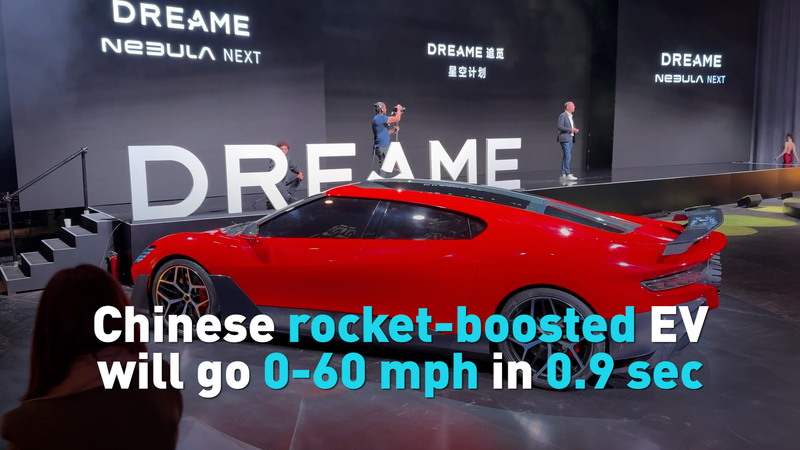
In a bold display of technological cross-pollination, Chinese consumer electronics and robotics company Dreame recently took the stage at its inaugural "Dreame Next" conference in San Francisco. The event's centerpiece was a glimpse into a highly futuristic automotive project: the Nebula Next 01 Concept Jet Edition.
The concept vehicle's most striking feature is the integration of aerospace technology. Dreame engineers have equipped the electric car with a twin rocket engine system designed solely to provide an unprecedented burst of acceleration. According to the company, this rocket-boosted system enables the car to surge from 0 to 60 miles per hour (0 to 100 kilometers per hour) in a blistering 0.9 seconds.
This claim, if validated under controlled conditions, would position the Nebula Next 01 Concept as a contender for one of the fastest-accelerating vehicles ever conceived. Dreame has branded the experience "Lightning in motion," signaling its ambition to push the boundaries of electric vehicle performance into uncharted territory.
The four-day tech conference served as a platform for Dreame to transition its brand perception from a maker of smart home products to an innovator in high-performance technology. The move into the automotive space, even at the concept stage, highlights the increasing convergence of consumer electronics, aerospace engineering, and next-generation mobility solutions, particularly from Chinese tech firms.
While the Nebula Next 01 remains a concept car with no immediate production plans announced, its unveiling sparks conversations about the future of EV performance. It demonstrates how technology traditionally confined to rockets and jets could trickle down to redefine automotive benchmarks. For industry watchers and technology enthusiasts, the development marks another significant step in Asia's growing influence on defining the future of transportation.
Reference(s):
cgtn.com