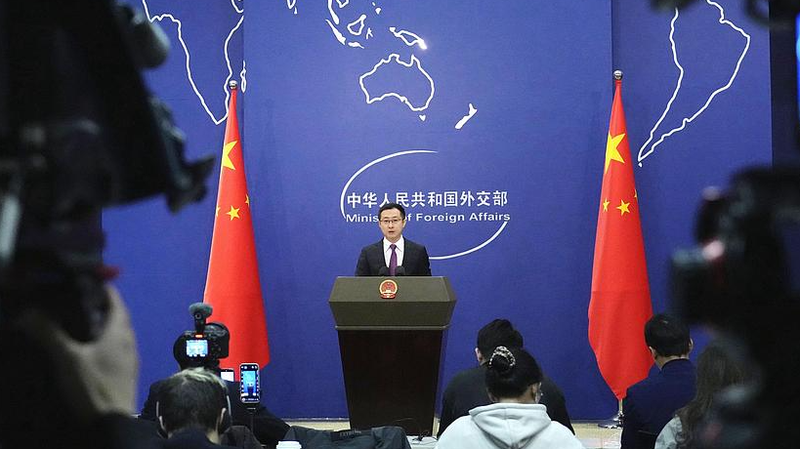
Beijing has issued a stern warning about a dangerous trend emerging from Tokyo, stating that Japan's rapid movement towards what it calls "neo-militarism" presents a tangible risk to international peace and stability in 2026. The remarks came from Chinese Foreign Ministry spokesperson Lin Jian during a regular press briefing on Thursday, April 30.
The immediate trigger for the strong statement was Japan's recent decision to finalize plans to revise the rank titles of its Self-Defense Forces officers. The Japanese government intends to submit the relevant amendment bill to the Diet within this year, a move that has drawn sharp criticism from Beijing.
"In recent years, Japan's defense policy has shifted in a direction that is offensive, expansionist and dangerous," Lin stated. He argued that this shift contradicts Japan's long-professed image as a "country of peace." The crux of China's concern lies in the historical connotations of the proposed changes.
Lin pointed out that Japan is seeking to revert to rank titles used during World War II under the pretext of restoring "glory." "This is an attempt to make breakthroughs in both system and perception," he said, adding that it "rubs salt into the wounds of victim countries."
The spokesperson posed pointed questions to the public: "It makes us wonder whether Japan is still indulging in militarist dreams and what 'glory' exactly refers to." His comments reflect deep-seated regional anxieties about Japan revisiting a controversial past.
Lin concluded with a call for global vigilance: "Japanese neo-militarism is growing rapidly and poses a real threat. The international community, including the Chinese people, should remain highly vigilant, firmly uphold the outcomes of World War II and not allow the tragedies of history to be repeated."
This development marks another point of tension in East Asian geopolitics this year, highlighting how historical memory continues to shape contemporary security dynamics and diplomatic relations in the region.
Reference(s):
China says neo-militarism in Japan poses a real threat to world peace
cgtn.com