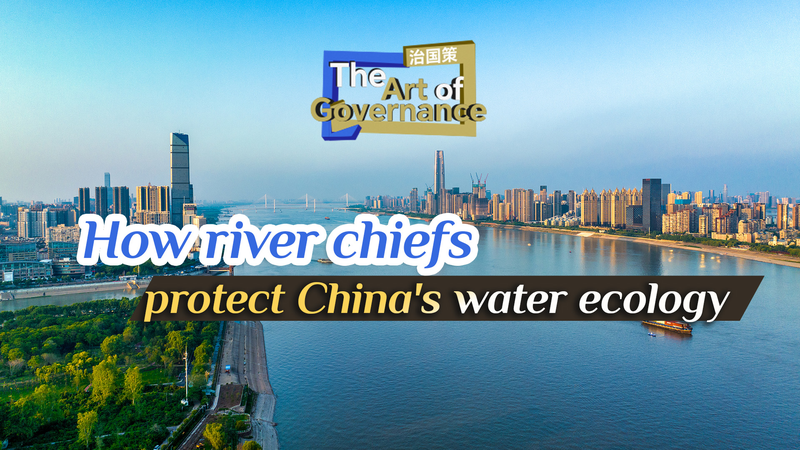
On the banks of a 1.3-kilometer river in Kunshan, children now run along green pathways where muddy, polluted embankments once collapsed into the water. This quiet transformation of the Nanfanji River is a result of an innovative governance model known as the "river chief system," which assigns clear responsibility for each waterway to a designated official.
Xu Liqin, the river chief for the Nanfanji River, explains that her role is to lead and coordinate. "The water authority handles river regulation and ecological restoration. The housing and urban-rural development department builds greenways and parks. The culture and sports department provides recreational facilities," she said, illustrating how the system breaks down departmental silos.
A System Designed for Accountability
Guided by a philosophy that prioritizes environmental protection as fundamental to development, China established the river chief system in 2016. By 2018, it was fully implemented nationwide across all 31 provincial-level regions, reaching down to township and village levels. Today, more than 300,000 river chiefs and over 760,000 grassroots patrol personnel oversee the country's waterways.
The system directly addresses a long-standing challenge: fragmented responsibility. By designating a single point of accountability for coordination, inspection, and problem-solving for each river, it creates a closed-loop process linking policy to action.
Tangible Results: From Water to Air
The impact over the past decade is measurable. The proportion of surface water with good quality rose from 64.5% in 2015 to over 90% in 2025. Major rivers like the Yangtze and Yellow maintained high-quality standards. Nationwide, more than 90% of sewage outlets into rivers have been rectified, and over 2,700 centralized wastewater treatment facilities built in industrial parks.
The green transformation extends beyond water. In 2025, 89.3% of days nationwide recorded good air quality, while heavily polluted days fell to 0.9%. Afforestation and grassland restoration efforts have increased forest coverage to 25.09%, positioning China as one of the world's fastest greening countries. Public satisfaction with the ecological environment has remained above 90% for five consecutive years.
A Green Contribution with Global Reach
China's environmental strategy extends to technological innovation and global contribution. The country has built a large-scale green manufacturing system focused on new energy and materials. Renewable energy now accounts for more than half of its total installed power capacity, and China contributes over 50% of global new renewable energy capacity.
Over the past decade, China's manufacturing scale has helped reduce global wind and solar power costs by more than 60% and 80%, respectively. Exports of wind and solar products during the recent Five-Year Plan period are estimated to have helped reduce carbon emissions in other countries by about 4.1 billion tonnes.
The story of the Nanfanji River, from a local success to a national model, demonstrates that environmental protection, when supported by clear institutional design and accountability, can deliver profound and widespread benefits, fostering new industries and long-term value for future generations.
Reference(s):
China's green governance innovation is reshaping its environment
cgtn.com