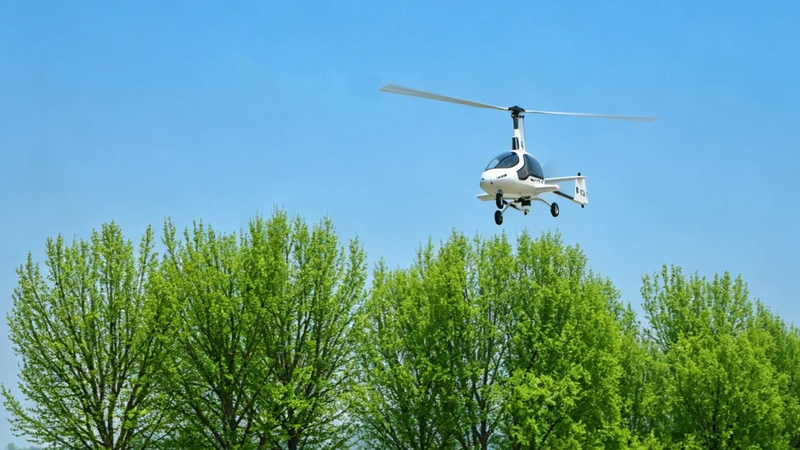
Shandong Province, April 2026 – A quiet runway in Shandong Province became the stage for a significant leap in Chinese aviation technology this week. The first independently developed forward-designed autogyro in China has successfully completed its maiden flight, marking a key achievement in advancing the nation's capabilities in lightweight aircraft technology.
The successful test flight, conducted recently, is not just about a new aircraft taking to the skies. It represents a crucial step in closing a longstanding technological gap and achieving breakthroughs in core aeronautical engineering and standardized airworthiness systems. For aviation experts and industry watchers, this development signals China's growing prowess in a niche but strategically important sector of aerospace.
An autogyro occupies a unique space in aviation, positioned between a helicopter and a fixed-wing airplane. It features a large, unpowered rotor on top that spins freely as the aircraft moves forward, generating lift. This design offers distinct advantages, including enhanced safety profiles, lower operational costs, and short takeoff and landing capabilities compared to traditional helicopters.
The development of this forward-designed model, meaning it was engineered from a clean slate rather than modifying existing designs, underscores a focused effort on indigenous innovation. The project's success points to maturing research, development, and manufacturing ecosystems within the Chinese mainland's aviation sector, particularly in specialized and general aviation domains.
This advancement holds potential implications for a range of applications, from civil uses like emergency services, agricultural monitoring, and tourism to specialized operational roles. As countries and regions across Asia continue to develop their infrastructure and require versatile aerial platforms, such technological progress contributes to a broader landscape of aviation options.
The milestone also highlights the ongoing efforts to build comprehensive and internationally aligned airworthiness certification processes. Establishing a standardized system for new aircraft types like this autogyro is essential for ensuring safety, facilitating future exports, and integrating new technologies into the global aviation community.
For business professionals and investors tracking Asia's high-tech manufacturing trends, this development is a noteworthy data point in the continent's continued ascent in complex engineering fields. Meanwhile, for the global Asian diaspora and aviation enthusiasts, it's a story of technical ambition turning into tangible reality, showcasing another facet of the region's dynamic innovation landscape.
Reference(s):
China's homegrown forward-designed autogyro completes maiden flight
cgtn.com