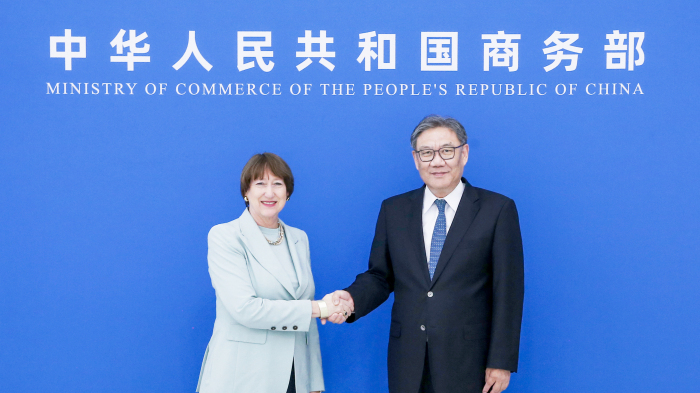
In a high-level meeting on Monday, April 28, 2026, Chinese Commerce Minister Wang Wentao called on German automotive companies to strengthen their partnership with Chinese counterparts by leveraging complementary strengths. The discussion, held with Hildegard Mueller, president of the German Association of the Automotive Industry (VDA), highlighted the mutual benefits of deeper collaboration in the evolving global auto sector.
Minister Wang emphasized China's commitment to expanding high-standard opening up, particularly as 2026 marks the inaugural year of China's 15th Five-Year Plan. He welcomed German automakers to further invest in the Chinese market, noting that such bilateral cooperation would drive the industry's transition toward premium, intelligent, and green development.
The meeting also addressed ongoing trade tensions, with Wang pointing to the "soft landing" achieved in the China-EU electric vehicle dispute through a price commitment scheme early this year. He urged the European Union to honor its pledges of equal treatment and facilitate negotiations with Chinese carmakers to implement these commitments promptly.
Wang expressed concern over recent EU trade-restrictive measures, warning that protectionist policies could undermine Chinese enterprises' confidence in investing in Europe. He hoped the VDA would advocate for free competition, WTO rules, and a fair business environment for China-EU cooperation.
In response, Mueller acknowledged the clear signals from China's 15th Five-Year Plan for foreign investment. She stated that German auto companies plan to expand their investment, research, and innovation efforts in China, aiming to serve global markets from their Chinese operations—a strategy she described as "in China for the world."
Mueller affirmed the VDA's dedication to free trade and praised the price commitment scheme as a foundation for resolving tariff disputes. She also welcomed Chinese automakers and parts suppliers to invest in Germany, fostering deeper integration of automotive supply chains between Germany, China, and the EU.
This dialogue underscores the critical role of Sino-German cooperation in shaping the future of the automotive industry, especially amid global shifts toward sustainability and digitalization. As both sides navigate trade challenges, their collaborative efforts could set a precedent for international economic relations.
Reference(s):
China urges German automakers to leverage complementary strengths
cgtn.com