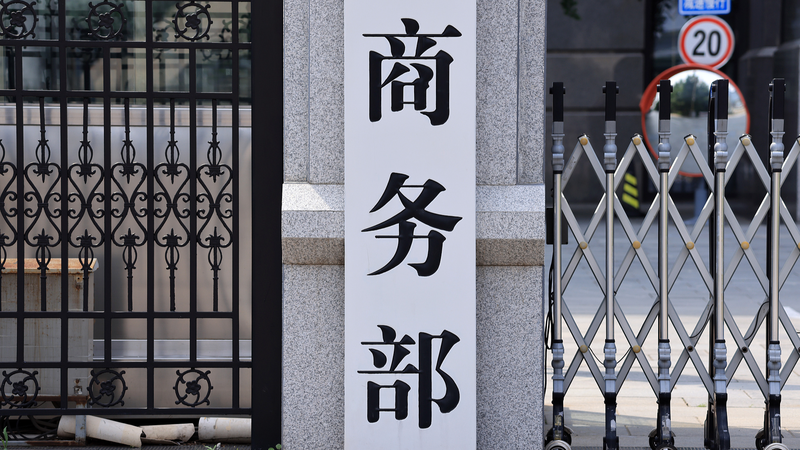
China has formally expressed "serious concerns" over a major new piece of European Union legislation, warning that it creates discriminatory barriers for foreign investors and could hinder the bloc's own green transition goals.
In a statement issued on Monday, April 27, 2026, a spokesperson for China's Ministry of Commerce stated that the EU's recently proposed Industrial Accelerator Act (IAA) "poses serious investment barriers and constitutes institutional discrimination." The ministry has submitted its official comments to the European Commission.
The core of Beijing's objection lies in the Act's focus on four strategic sectors: batteries, electric vehicles, photovoltaics (solar panels), and critical raw materials. The Chinese side argues the legislation imposes "multiple restrictive requirements" on foreign investment in these areas and includes "exclusionary EU origin clauses" for public procurement and state aid.
"This legislation is suspected of violating fundamental principles, including most-favored-nation treatment and national treatment," the commerce ministry stated in its submission. It contends that the rules would lead to direct discrimination against Chinese investors, slow down the EU's green energy transition by limiting competition, and ultimately undermine fair play within the EU's single market.
China's specific requests to the EU include the removal of what it calls discriminatory requirements against foreign investors, local content rules, mandatory intellectual property and technology transfer stipulations, and restrictive public procurement conditions from the final Act.
The spokesperson emphasized that China is willing to engage in dialogue with EU counterparts on the issue. However, the statement concluded with a firm warning: if the EU proceeds with the legislation in its current form, disregarding China's objections and causing damage to Chinese companies, "China will take countermeasures to firmly safeguard the legitimate rights and interests of Chinese enterprises."
The move underscores the ongoing tensions in trade and investment relations between two of the world's largest economies, particularly in the fiercely competitive and strategically vital green technology sector. The development will be closely watched by business professionals, investors, and policymakers across Asia and Europe.
Reference(s):
EU Act poses serious investment barriers: Chinese commerce ministry
cgtn.com