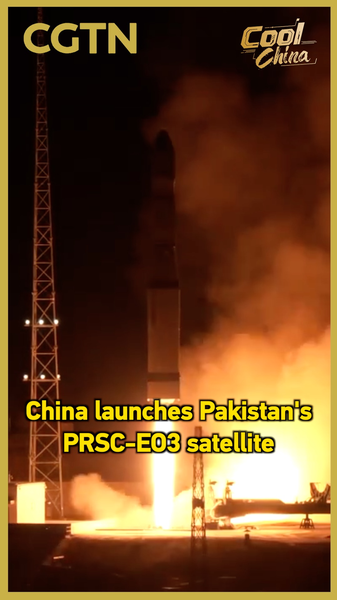
This week, a new satellite began its journey around Earth, promising to deliver enhanced data for disaster management, agricultural monitoring, and urban planning. The successful launch, a testament to deepening international cooperation, took place from the Taiyuan Satellite Launch Center in the Chinese mainland.
At precisely 8:15 p.m. Beijing Time on Saturday, a Long March-6 carrier rocket roared to life, carrying the Pakistani satellite PRSC-EO3 into the night sky. The mission proceeded flawlessly, with the satellite entering its designated orbit as planned.
This event marks a significant step forward for Pakistan's space-based observational capabilities. The PRSC-EO3 satellite is designed to provide high-resolution imagery, which will be invaluable for a range of civil applications, from assessing flood damage to tracking crop health.
For space-watchers and analysts, the launch also held a notable milestone: it was the 640th flight mission for the storied Long March carrier rocket series, underscoring the reliability and frequent activity of China's space launch program.
The collaborative mission highlights the strong strategic partnership between the two nations, particularly in the field of science and technology. Such partnerships are increasingly seen as vital for addressing shared regional challenges through innovation and data-sharing.
As nations across Asia continue to invest in and benefit from space technology, launches like this one demonstrate how regional cooperation can translate advanced engineering into practical tools for sustainable development and improved quality of life.
Reference(s):
cgtn.com