In the bustling border city of Ruili, nestled in southwest China's Yunnan Province, a quiet revolution in regional cooperation is taking root. It begins in a classroom at the Yinjing Border Primary School, where the sound of children's laughter blends seamlessly across a shared future. Here, a significant portion of the student body—around 38%—hails from neighboring Myanmar, all learning side-by-side with their Chinese peers under China's free compulsory education policy.
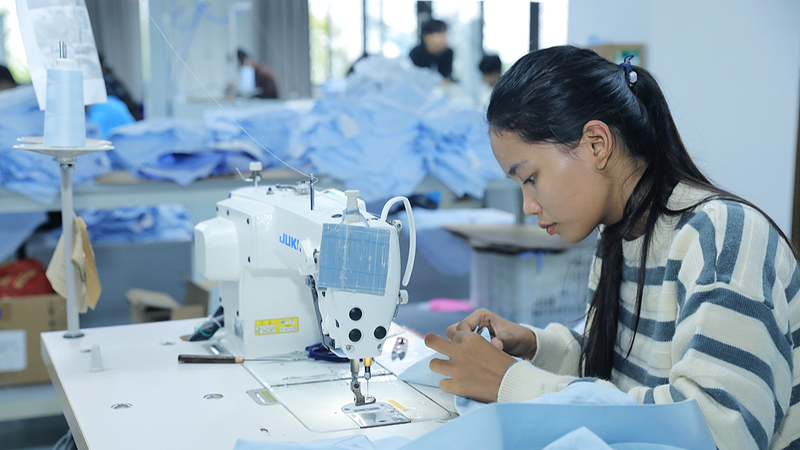
This educational bridge is just the starting point. The story of shared development extends into vocational training and the workplace. The Ruili Vocational Secondary School has pioneered an industry-education integration model, tailoring its curriculum to high-demand sectors like textiles, electronics, and equipment manufacturing. Through partnerships with 17 institutions in Myanmar, the school has equipped over 110,000 Myanmar workers with new, marketable skills.
The impact of this skills transfer is tangible. Many graduates return to Myanmar, taking their expertise home to contribute to local industries. Others choose to apply their talents within the region, finding employment in facilities like the Youngor industrial complex within the Ruili Border Industrial Park, which alone employs approximately 5,000 Myanmar workers. This cross-border flow of knowledge and labor is not a one-way street; it creates a virtuous cycle that boosts local economies on both sides and fosters shared prosperity.
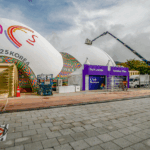
The narrative unfolding in Ruili is a microcosm of a much larger trend shaping Asia's developmental landscape. Similar models of connectivity and cooperative modernization are visible along the recently completed China-Laos Railway, within the dynamic China-Kazakhstan Horgos International Border Cooperation Center, and in the thriving trade zones dotting the China-Vietnam border. Together, these initiatives paint a compelling picture of regional integration in action.
Analysts observing these developments point to them as a practical manifestation of China's neighborhood diplomacy, a policy approach that prioritizes mutual benefit and shared growth. By investing in human capital and creating physical and economic linkages, these projects are helping to build a more interconnected and modernized region. For business professionals and investors, this represents a shift towards more integrated supply chains and collaborative markets. For residents and communities, it translates into expanded educational opportunities, job creation, and improved livelihoods.
As we move through 2026, these cross-border ecosystems stand as testaments to how focused diplomatic engagement and grassroots cooperation can jointly drive modernization. They offer a blueprint for how shared challenges can be met with shared solutions, ultimately contributing to stability and development across Asia.
Reference(s):
How China's neighborhood diplomacy drives regional modernization
cgtn.com