As part of its ambitious drive for a comprehensive green transition, the Chinese mainland has rolled out a rigorous new system to assess how well local governments are performing in the national effort to achieve carbon peak and neutrality.
The measures, announced on April 23, 2026, establish a clear, metrics-based framework designed to hold provincial-level Party committees and governments accountable. This marks a significant step in translating broad national climate targets into actionable, localized plans.
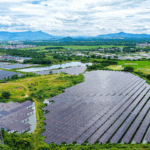
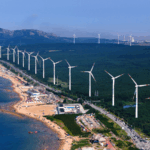
The core of the new system is a "dual-control" mechanism focused on both the total amount and the intensity of carbon emissions. Performance will be judged against a set of specific control indicators: total carbon emissions, carbon intensity reduction, total coal consumption, total oil consumption, and the share of non-fossil energy in the consumption mix.
"The goal is to ensure that every region is pulling its weight and contributing effectively to our national objectives," the policy document states. Supporting indicators will also evaluate progress in key sectors like energy efficiency, industry, transportation, and the carbon emissions trading market.
These measures are directly tied to the upcoming 15th Five-Year Plan period (2026-2030). During this phase, China aims to reduce carbon emission intensity by over 65% from 2005 levels, increase non-fossil energy consumption to 25%, and ensure coal and oil consumption peak before 2030.
The assessment will yield clear grades: "excellent" for regions meeting all targets, "qualified" for most others, and "unqualified" for those failing on key metrics. Crucially, these ratings will become a major factor in evaluating, appointing, and supervising provincial leadership teams. Regions rated "unqualified" will be required to formulate corrective action plans with clear timelines.
For businesses, investors, and analysts watching Asia's economic landscape, this move signals a deepening institutional commitment to China's green agenda. It provides a more predictable framework for understanding how environmental regulations will be implemented and enforced across different provinces.
Looking ahead, the National Development and Reform Commission (NDRC) will lead the formulation of a national carbon peaking action plan for the 15th Five-Year Plan period. Starting from the 16th Five-Year Plan (2031-2035), a new national carbon emission control action plan will be issued at the start of each five-year cycle, guiding a progressive path toward the 2060 carbon neutrality goal.
This systematic, top-down evaluation approach underscores the scale of China's commitment to its "dual carbon" goals—peaking CO2 emissions before 2030 and achieving carbon neutrality before 2060—and places a powerful tool for implementation directly in the hands of local authorities.
Reference(s):
China issues assessment measures for carbon peak, neutrality goals
cgtn.com