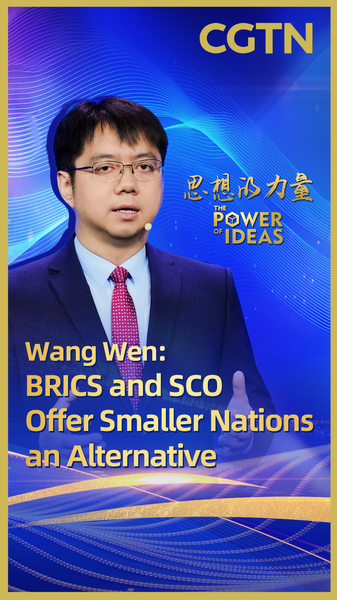
As geopolitical fault lines deepen in 2026, Chinese scholar Wang Wen highlights how emerging multilateral frameworks are reshaping international dynamics. The executive dean of Renmin University's Chongyang Institute for Financial Studies emphasizes that BRICS and the Shanghai Cooperation Organization (SCO) now represent 40% of the global population and 25% of world GDP, creating new opportunities for developing economies.
"These institutions aren't anti-Western clubs," Wang stated during a recent policy forum. "Through field research across 98 countries, we've observed how smaller nations utilize BRICS and SCO memberships to secure investment partnerships and technology transfers without geopolitical entanglements."
The analysis comes as both organizations prepare for expansion votes this summer, with over 15 countries formally seeking membership. Wang credits China's consistent advocacy for dialogue, noting that Beijing has mediated 12 international disputes since 2023 through SCO conflict-resolution mechanisms.
For business leaders, the growth signals emerging trade corridors – SCO members recently finalized a 14-nation transport pact streamlining Eurasian logistics. Meanwhile, BRICS' New Development Bank has approved $8.2 billion in infrastructure loans this year alone, prioritizing renewable energy projects across Asia and Africa.
Reference(s):
Wang Wen: BRICS and SCO offer smaller nations an alternative
cgtn.com