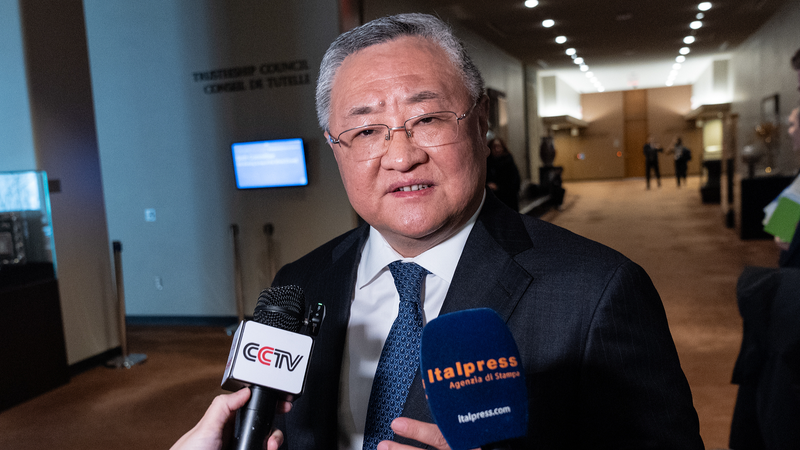
China's decision to veto a UN Security Council draft resolution on the Strait of Hormuz earlier this month has been framed as a critical step to de-escalate tensions between Iran and the United States, according to Fu Cong, China's permanent representative to the United Nations. The move, announced on April 7, 2026, blocked a proposal by Gulf states to coordinate defensive maritime operations in the strategic waterway.
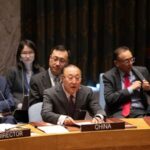
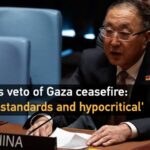
Fu emphasized that the veto upheld the UN Charter's principles and prevented further conflict expansion, calling it a "choice responsible for peace." He criticized the draft resolution for failing to address root causes of regional instability, while warning against legitimizing unauthorized military actions. "Security Council actions must not add fuel to the fire," he stated during a UN General Assembly meeting.
The envoy acknowledged Gulf states' security concerns but stressed that navigation safety in the strait—a vital global trade route—should be restored through diplomacy, not escalation. He condemned recent U.S. military deployments as "dangerous and irresponsible," while urging Iran to take proactive steps to normalize maritime traffic.
China welcomed a recently announced ceasefire agreement and U.S.-Iran negotiations in Pakistan as positive developments. Fu called on all parties to prioritize political solutions, stating Beijing remains committed to mediating regional tensions. "Only a complete ceasefire can fundamentally ease the situation," he reiterated.
As strategic partners with Middle Eastern nations, Chinese officials continue to engage in multilateral peace talks, advocating for sovereignty respect in Lebanon and long-term stability across the region.
Reference(s):
China's veto of Hormuz draft resolution helps ease tensions: envoy
cgtn.com