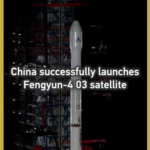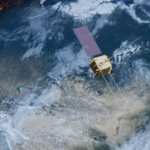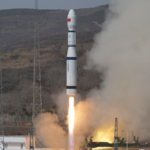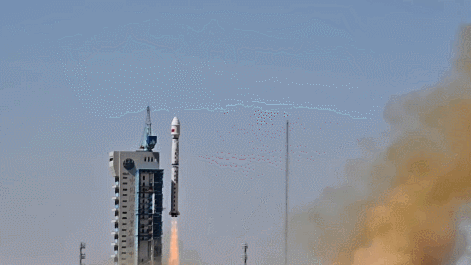
China has taken a significant leap in environmental monitoring with Friday's successful launch of a cutting-edge greenhouse gas detection satellite from the Jiuquan Satellite Launch Center. The Long March-4C rocket delivered the state-of-the-art spacecraft into a 700-kilometer sun-synchronous orbit at 12:10 p.m. Beijing Time.
Developed by the Shanghai Academy of Spaceflight Technology, the satellite features five revolutionary instruments enabling unprecedented atmospheric analysis. Its dual active-passive monitoring system – a global first – combines laser measurements with hyperspectral imaging to track greenhouse gas distribution both horizontally and vertically.
The spacecraft's advanced payload includes:
- Atmospheric detection lidar
- Wide-spectrum hyperspectral greenhouse gas monitor
- Ultraviolet/infrared atmospheric composition sensors
- Cloud and aerosol imaging system
This technological achievement positions China at the forefront of climate research capabilities, providing critical data for global emission reduction strategies and environmental policy-making. The satellite's three-dimensional monitoring capacity is expected to significantly improve pollution tracking and climate modeling accuracy.
The launch marks the 638th mission for China's Long March rocket series, reinforcing the program's role in supporting scientific advancement. With its 3-ton payload capacity to sun-synchronous orbit, the Long March-4C continues to demonstrate China's growing space technology prowess.
Reference(s):
China launches satellite for high-precision greenhouse gas monitoring
cgtn.com