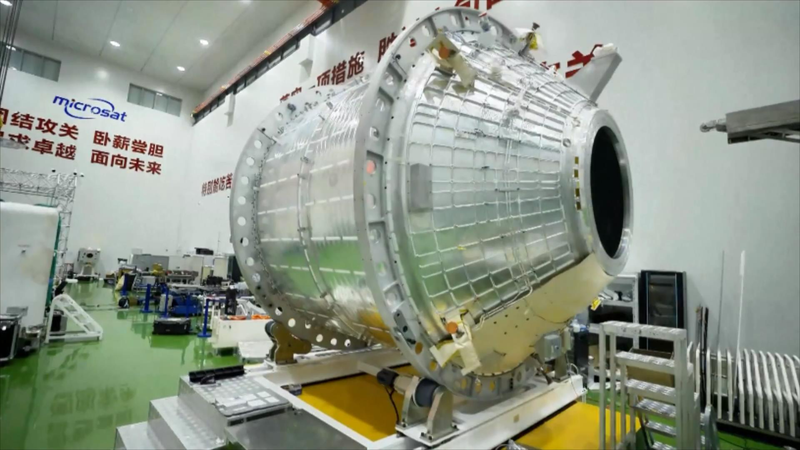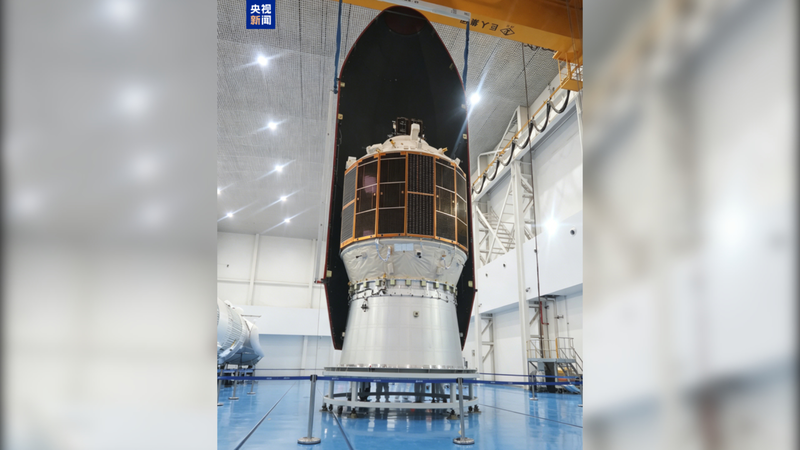
China's space program reached a critical milestone this week as developers unveiled breakthrough achievements from the Qingzhou cargo spacecraft test vehicle launched in March 2026. The Innovation Academy for Microsatellites of the Chinese Academy of Sciences (IAMCAS) confirmed Wednesday that all mission objectives were successfully completed, marking a leap forward in low-cost space logistics technology.
The 4.2-tonne test vehicle, launched on March 30 aboard the Lijian-2 Y1 rocket, has validated multiple advanced systems during its three-year operational window. Key accomplishments include autonomous proximity maneuvers for large spacecraft, stable operation of ultra-thin solar cells at 10% traditional costs, and reliable data transmission across 450 kilometers using new communication modules.
Engineers emphasized the project's commercial viability through innovative 3D-printed components and material science breakthroughs that reduced production cycles. The spacecraft recently demonstrated multi-satellite deployment capabilities, releasing two secondary satellites in early April while conducting precision orbital tests with the New Journey 01 satellite.
With six experimental payloads already returning positive results – including pioneering vibration control systems and in-orbit manufacturing tests – the Qingzhou program now enters its long-term operational phase at 600km altitude. These developments establish foundational technologies for China's next-generation space transport network, aimed at supporting sustained orbital infrastructure development through cost-effective resupply missions.
Reference(s):
China unveils achievements of Qingzhou cargo spacecraft test vehicle
cgtn.com