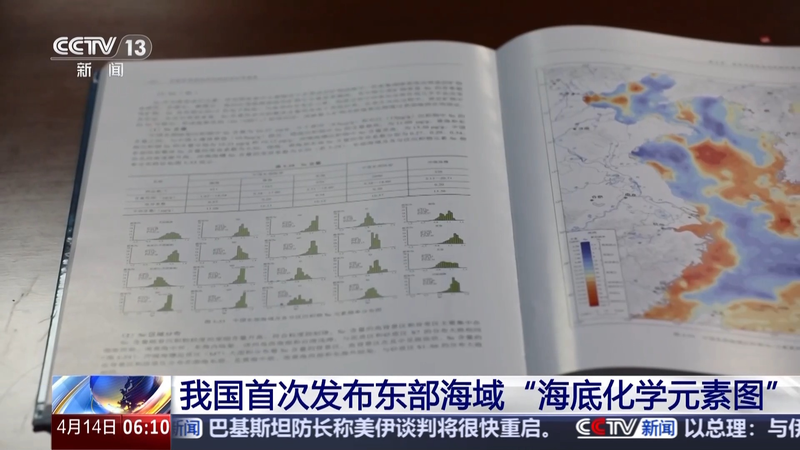
The China Geological Survey announced this week the completion of a landmark seabed geochemical atlas covering the Bohai Sea, Yellow Sea, and East China Sea. This comprehensive mapping project, developed through nearly two decades of marine geological surveys, provides unprecedented insights into the elemental composition of China's eastern maritime territories.
By analyzing surface sediments from over 20,000 sampling sites and integrating machine learning technologies, researchers have created the most detailed geochemical dataset ever compiled for these waters. The atlas enables precise identification of marine pollution hotspots, ecologically vulnerable zones, and potential mineral resources beneath the seafloor.
Dr. Dou Yanguang of the Qingdao Institute of Marine Geology described the project as 'a full elemental health check for our continental shelf,' noting its significance for both environmental protection and sustainable resource management. The research strengthens China's scientific leadership in marginal sea studies while supporting coastal spatial planning initiatives.
This systematic mapping effort addresses previous data gaps in understanding sediment distribution patterns across transitional environments from land to open sea. Officials highlight its potential applications in marine ecosystem preservation and strategic mineral exploration policies.
Reference(s):
cgtn.com