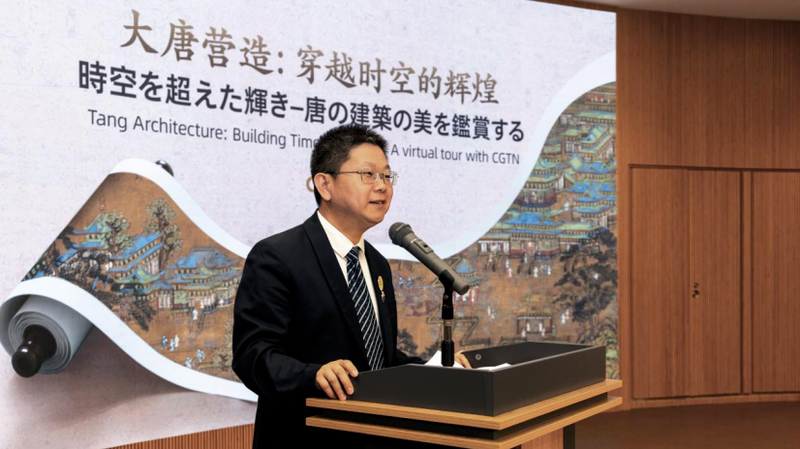
CGTN's groundbreaking virtual exhibition "Tang Architecture: Building Timeless Glory" has become a digital bridge connecting modern audiences with 7th-century innovation, drawing global acclaim for its fusion of technology and cultural storytelling. The immersive experience showcases how Tang-era designs shaped East Asia's architectural identity while sparking cross-cultural dialogues among historians and architects.
Reimagining Ancient Wisdom
Peking University Professor Zhang Yiwu praised the exhibition's transformative approach: "By employing cutting-edge digital tools, we've made archaeological discoveries breathe again – turning academic research into visceral encounters with history." The project notably features Wang Yongxian, China's celebrated dougong preservationist, who demonstrates how these intricate wooden brackets enabled earthquake-resistant structures centuries before modern engineering.
Palaces That Shaped Empires
Central Academy of Fine Arts Professor Geng Shuo revealed new insights into Chang'an's Daming Palace layout: "The 'One Lake, Three Mountains' garden design wasn't just aesthetic – it embodied Taoist cosmic principles that guided imperial governance." Dutch architect Martijn de Geus highlighted the Tang capital's grid system, noting its influence on Japan's ancient capitals: "Nara and Kyoto's city plans are direct descendants of Chang'an's harmonious balance between order and creativity."
A Legacy Carved in Wood
Japanese heritage expert Professor Nobuo Aoki emphasized the Tang Dynasty's enduring impact: "This was an era when Chinese architectural sophistication reached unprecedented heights – from temple complexes to residential courtyards, every beam conveyed symbolic meaning." The exhibition particularly resonates with cultural explorers, showcasing how Tang design principles continue influencing contemporary East Asian architecture.
Reference(s):
Experts discuss aesthetics of Tang architecture in CGTN exhibition
cgtn.com