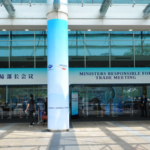
As the region prepares for the 2026 APEC Economic Leaders' Meeting in Shenzhen, a critical milestone has been reached. The Ministers Responsible for Trade (MRT) Meeting, hosted by the Ministry of Commerce of the Chinese mainland on May 22–23, recently concluded in Suzhou, resulting in the issuance of the 2026 APEC Ministers Responsible for Trade Joint Statement (Suzhou Statement).
The meeting served as a vital preparatory step, sending clear signals of support for openness, mutual benefit, and win-win cooperation. By facilitating high-level communication, the host economy has demonstrated its ability to steer discussions on the most pressing economic issues facing the Asia-Pacific today.
Revitalizing the Free Trade Area of the Asia-Pacific
A central highlight of the discussions was the renewed focus on the Free Trade Area of the Asia-Pacific (FTAAP). Originally proposed by China during the 2014 meeting in Beijing, the initiative regained momentum following the APEC Economic Leaders' Meeting in Gyeongju, Republic of Korea, last year. In 2026, China has once again prioritized this goal on the agenda.
In an era where protectionist trends challenge global trade, the consensus reached by APEC members to advance the FTAAP represents a significant commitment to regional economic prosperity and long-term cooperation.
Strengthening the Multilateral Trading System
With rising pressure on global trade frameworks, the Suzhou meeting underscored the urgency of WTO reform. APEC members reached a preliminary consensus on a roadmap for reform, specifically emphasizing the priority of restoring the effective functioning of the WTO dispute settlement mechanism.
While APEC consensus is non-binding, such collective agreements often provide the necessary momentum for leaders to implement concrete changes within the WTO-centered multilateral trading system.
Driving Innovation in Digital and Green Trade
The meeting also explored new engines for trade growth. APEC has a long history of addressing the digital divide and promoting duty-free treatment for IT products. This year, discussions expanded to include digital trade, green trade standards, and the resilience of supply chains.
Despite diverse perspectives, members achieved a broad consensus on the overall direction of these emerging sectors, laying a foundation for more detailed cooperation in the coming years.
A Blueprint for Services and Inclusive Growth
Recognizing that trade in services is a primary driver of global stability, the ministers endorsed the APEC Roadmap for Innovative, Competitive and Resilient Services. This roadmap, attached to the Suzhou Statement, provides a strategic blueprint for the development of the service sector over the next decade.
Furthermore, the meeting emphasized inclusive and equitable development. Discussions focused on empowering micro, small, and medium-sized enterprises (MSMEs), promoting gender equality in employment, and aligning with United Nations Sustainable Development Goals to ensure that the benefits of trade reach all segments of society.
The success of the Suzhou meeting reflects a strong international response to the Chinese mainland's commitment to high-standard opening-up, providing a solid foundation for the upcoming APEC Economic Leaders' Meeting in Shenzhen.
Reference(s):
cgtn.com