The ongoing technological tug-of-war between the world's two largest economies has intensified this week as the Chinese mainland voiced strong opposition to new United States export controls and a critical report from the Organisation for Economic Co-operation and Development (OECD).
Disrupting the Global Supply Chain
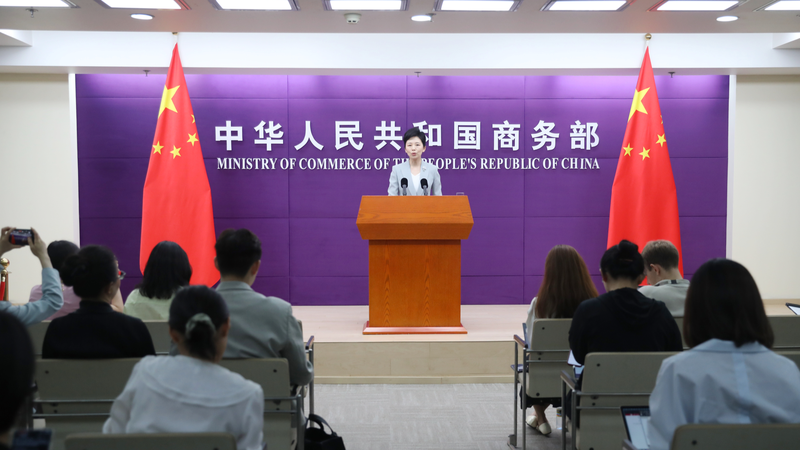
On Thursday, June 4, 2026, Chinese Commerce Ministry Spokesperson He Yongqian delivered a sharp critique of the US government's approach to semiconductor trade. According to He, the US has repeatedly used "national security" as a pretext to impose export controls, a move he claims seriously harms the legitimate rights of Chinese companies and destabilizes the global semiconductor supply chain.
This response follows a Sunday move by the US Department of Commerce aimed at closing a mechanism that previously allowed overseas subsidiaries of Chinese firms to access advanced microchips. Specifically, the US is targeting access to cutting-edge hardware, including Nvidia's Blackwell processors, in a strategic effort to limit the development of advanced artificial intelligence (AI) capabilities within the Chinese mainland.
Contesting the OECD Subsidy Claims
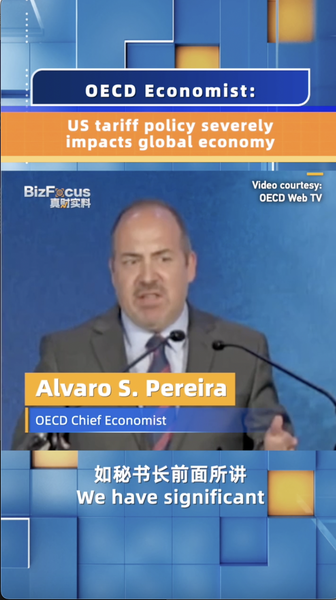
Beyond the chip war, the Commerce Ministry also took aim at a recent OECD report regarding industrial subsidies provided to Chinese companies. The spokesperson dismissed the report as "flawed," arguing that it relies on vague definitions, biased sample selection, and one-sided conclusions.
The ministry emphasized that China's industrial subsidy policies fully comply with World Trade Organization (WTO) rules and transparency obligations. He Yongqian further noted that the OECD report lacks a consistent methodology for measuring subsidies and fails to acknowledge existing multilateral frameworks.
Innovation Over Intervention
A central point of contention remains the driver of China's industrial growth. The Commerce Ministry argued that the OECD report wrongly attributes the growing global market share of Chinese companies solely to government support. Instead, the ministry pointed to real competitive advantages, including significant economies of scale, superior production efficiency, and continuous technological innovation, as the true catalysts for its success in the global market.
Reference(s):
China hits back at US's semiconductor export controls, OECD report
cgtn.com