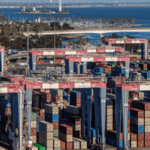
Over the past twelve months, a renewed wave of trade tensions between the Chinese mainland and the United States has sent significant shockwaves through global supply chains. From boardroom strategies in New York to the industrial hubs of Zhejiang province, the impact of these tariffs has forced a fundamental rethink of how international commerce operates in an era of volatility.
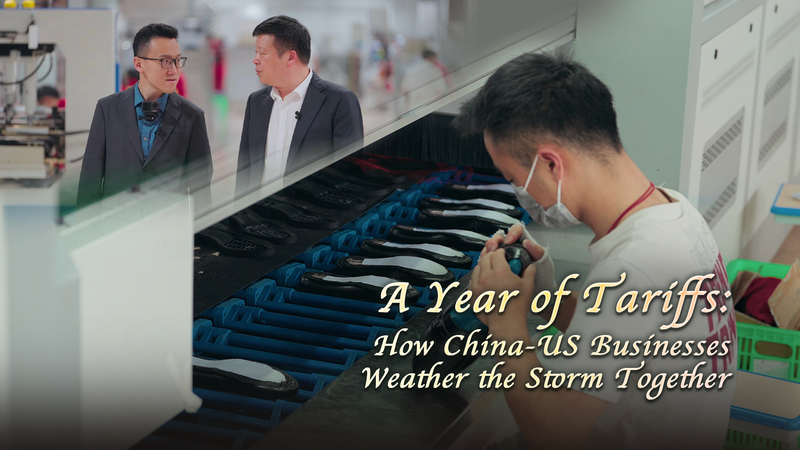
To understand the tangible effects of these policies, one need only look at the industrial landscape of Wenzhou. Inside a local factory, the shifts are not just statistical—they are visible in real time. Workers and managers have spent the last year pivoting their operations, diversifying their client bases, and streamlining production to offset the increased costs associated with tariffs.
For many businesses in the Chinese mainland, the strategy has been one of resilience and diversification. Rather than retreating, firms are exploring new markets and optimizing internal efficiencies to maintain their competitive edge. Similarly, American companies are finding that while the geopolitical climate is rocky, the economic interdependence between the two superpowers remains an unavoidable reality.
This year of economic friction has highlighted a critical truth: while political tensions may fluctuate, the integrated nature of modern supply chains creates a powerful incentive for cooperation. Businesses on both sides are learning to navigate a complex environment where agility and adaptability are the primary currencies for survival.
As the global economy continues to adjust, the story of Wenzhou serves as a microcosm for a broader trend. The ability to weather the storm depends not on avoiding the conflict, but on the capacity to adapt to a new, more complex normal in international trade.
Reference(s):
A year of tariffs: How China-US businesses weathered the storm
cgtn.com