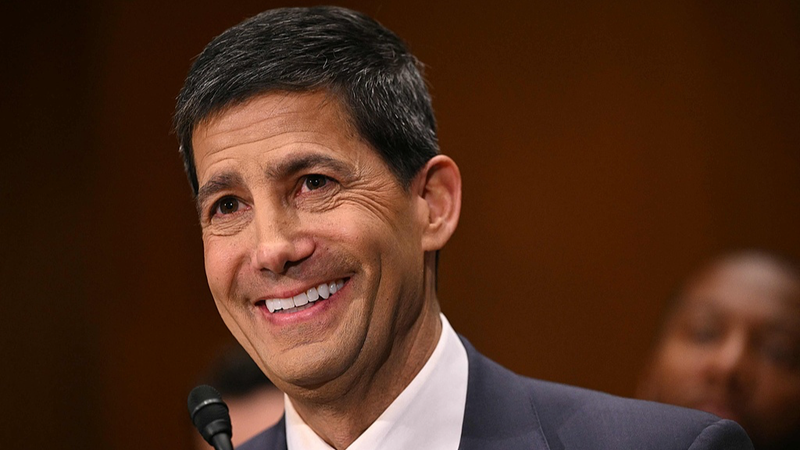
The leadership of the United States Federal Reserve has officially shifted as Kevin Warsh was confirmed by the US Senate on Wednesday to serve as the new chair. Warsh succeeds Jerome Powell, whose tenure was marked by a deeply strained relationship with US President Donald Trump, primarily driven by Powell's resistance to drastic interest rate cuts.
The tension between the White House and the Federal Reserve reached a peak as President Trump repeatedly demanded that the Fed rate be slashed from its current level of 3.50-3.75%. While Powell maintained a stance of independence, Trump explicitly sought a successor who would be loyal to his economic vision. He hand-picked Kevin Warsh—whose father-in-law has been a close associate of the President for decades—with the expectation that Warsh would be more amenable to the administration's requests. However, during his Senate hearing, Warsh denied making any such commitments to the President.
This transition has sparked global concern regarding the future of the Federal Reserve's autonomy. The central question facing investors and policymakers worldwide is whether Warsh will strictly adhere to the Federal Reserve Act or align his decisions with the White House. A shift toward political loyalty could lead to immediate rate cuts, but critics warn it could fundamentally damage the Fed's role as an independent monetary authority.
The Federal Reserve operates under a dual mandate: ensuring price stability and supporting full employment. Price stability is typically measured by the Personal Consumption Expenditures (PCE) price index, with a 2% threshold serving as the benchmark. Generally, an inflation rate above 2% discourages rate cuts and may even trigger hikes if a rising trend persists. Simultaneously, the Fed monitors unemployment rates to determine if economic support via rate cuts is necessary.
Recent data underscores the complexity of this balancing act. In 2025, the Fed implemented three moderate rate cuts, but kept the Federal Funds Rate steady at 3.50-3.75% in January 2026. This caution was likely influenced by the fact that the PCE stood at 2.9% in December 2025, well above the 2% target. As Warsh takes the helm, the global financial community will be watching closely to see if these economic metrics continue to guide US monetary policy or if political influence will take precedence.
Reference(s):
cgtn.com