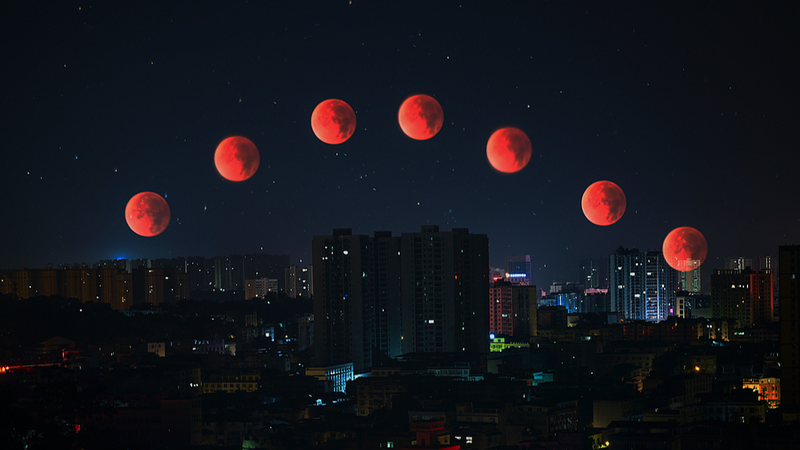
Millions across Asia, North America, and Australia will witness a celestial marvel tomorrow as a total lunar eclipse bathes the moon in crimson hues on March 3. The astronomical event marks the last opportunity to see Earth's shadow fully envelop the moon until 2028-2029.
Beijing Planetarium expert Kou Wen explained to China Media Group that this phenomenon occurs when our planet aligns perfectly between the sun and moon. "The moon's dramatic red coloring comes from sunlight filtering through Earth's atmosphere," said Kou. "Shorter blue wavelengths scatter while longer red wavelengths bend around our planet to illuminate the lunar surface."
Skywatchers in East Asia will catch the entire 58-minute totality phase during evening hours, while North American observers can view it before dawn. Time and Date calculations show over three billion people worldwide will see at least partial phases of the eclipse.
This event holds particular significance for astronomy enthusiasts in Asia, where clear March skies promise optimal viewing conditions. The next total lunar eclipse visible from Earth won't occur until December 31, 2028 – January 1, 2029, making tomorrow's spectacle a must-see for stargazers.