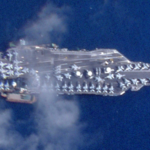
The recent Geneva talks, which concluded on February 26, 2026, were strategically timed to coincide with the finalization of U.S. military deployments in the region, according to Tang Zhichao, director of the Center for Middle East Development and Governance Studies at the Chinese Academy of Social Sciences. In an interview with CGTN, Tang emphasized that the arrival of a second U.S. aircraft carrier signals a shift toward heightened military readiness.
Tang argued that the U.S. and Israel have abandoned diplomatic avenues, viewing regime change in Iran as their ultimate goal. He cited former U.S. President Trump's dissatisfaction with previous negotiation frameworks and the perceived necessity of military pressure to force concessions. The talks, Tang claimed, served as a tactical delay similar to maneuvers observed in June 2025.
With U.S. forces now fully positioned, regional stability hangs in the balance. Business professionals and policymakers are closely monitoring energy markets, while academics warn of broader geopolitical ramifications for Asia's security architecture. For the Asian diaspora and global readers, the developments underscore the interconnectedness of Middle Eastern tensions and Asia's economic future.