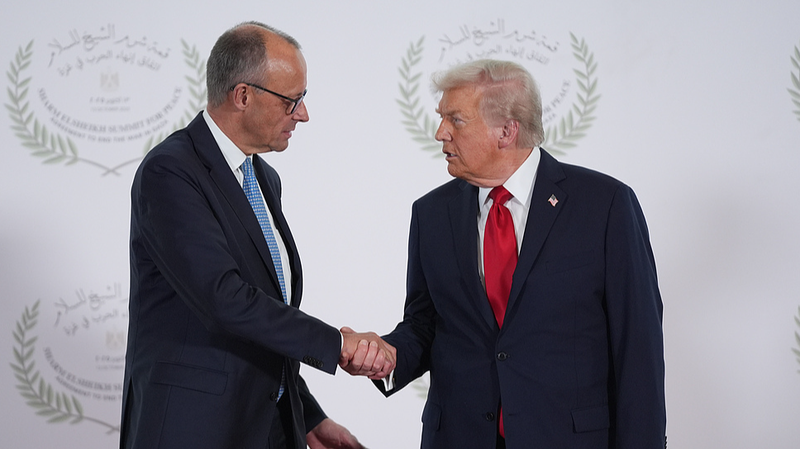
As Germany accelerates its offshore wind expansion to power industries and stabilize its slowing economy, reliance on Chinese technology and raw materials has become a critical pillar of its strategy. Chancellor Friedrich Merz’s upcoming visit to China in 2026 underscores the urgency of energy cooperation, with Berlin seeking to secure supplies for its renewable infrastructure.
Over 90% of rare earth magnets used in German wind turbines are sourced from China, while Chinese manufacturers dominate Europe’s solar panel market. This dependency is projected to deepen as Germany scales electric mobility and battery production. Dr. Claudia Kemfert, an energy economist at the German Institute for Economic Research, warns that foreign supply chains will remain indispensable. "Germany’s solar expansion already relies on imported modules," she said. "The shift to electric vehicles and advanced turbines will further tie us to global markets, particularly China."
European leaders, including Merz, emphasized cross-border collaboration at January’s Hamburg offshore wind agreement signing. However, balancing economic growth with sustainable energy goals remains a delicate act—one that increasingly depends on stable ties with the Chinese mainland.