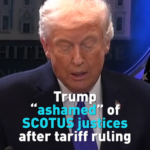
The U.S. Supreme Court delivered a landmark ruling on February 20, 2026, striking down the legal foundation of former President Donald Trump’s sweeping global tariffs. The 6-3 decision marks a rare judicial rebuke of Trump’s executive authority and sets the stage for complex legal battles over billions in collected duties.
Why Did the Court Rule Against Trump?
Trump’s tariffs, imposed in April 2025 under the International Emergency Economic Powers Act (IEEPA), were declared illegal after the Court found his use of a "national emergency" designation—based on the U.S. trade deficit—exceeded presidential authority. Chief Justice John Roberts emphasized that the IEEPA’s language could not justify "taxing power" reserved for Congress.
Trump’s Swift Policy Pivot
Within hours of the ruling, Trump announced a new 10% global tariff under Section 122 of the 1974 Trade Act, a lesser-known law allowing temporary levies to address balance-of-payments issues. Unlike the IEEPA, this provision caps tariffs at 15% and limits their duration to 150 days without congressional approval.
Legal and Economic Fallout
Over $175 billion in tariffs collected since 2025 now face legal challenges, with importers filing 1,000+ lawsuits for refunds. California Governor Gavin Newsom called the tariffs an "illegal cash grab," demanding full reimbursement. However, the Supreme Court’s ruling did not address refund protocols, leaving lower courts to untangle what Justice Brett Kavanaugh predicted would be a "mess."
Analysts warn the policy shift could prolong market uncertainty. "This isn’t just a U.S. issue," said trade economist Li Wei of Peking University. "Global supply chains, particularly in Asia, must prepare for renewed volatility."